Why Is My Cat Hissing at My Other Cat?
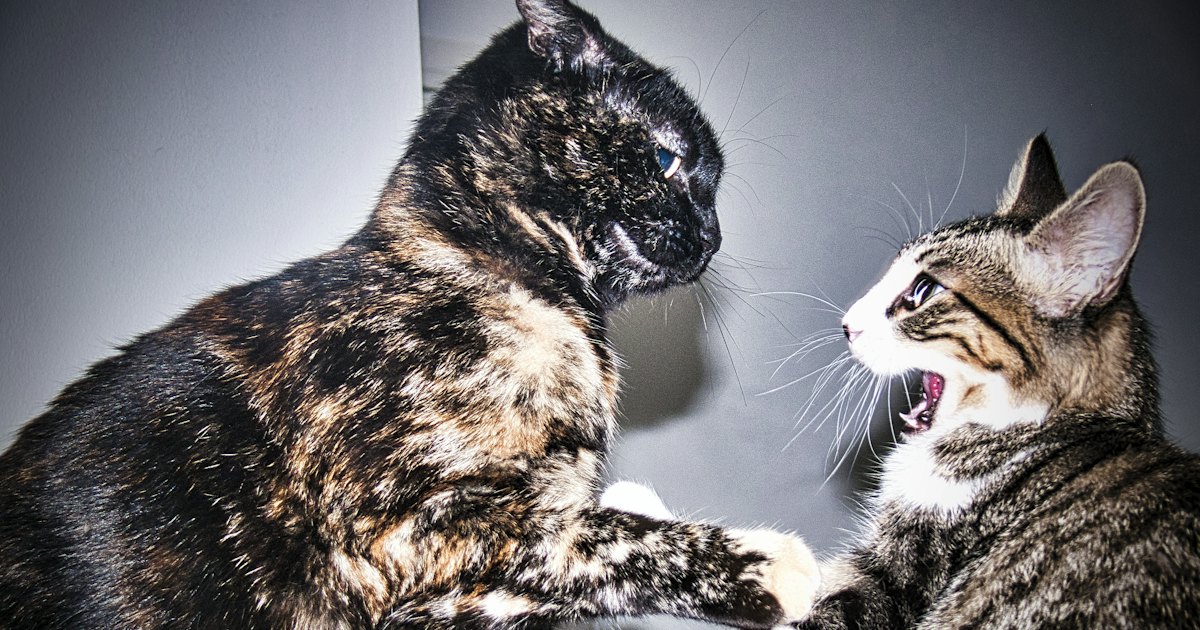
Your cat is hissing at your other cat because something about that cat's scent, sound, or behavior changed — not because they suddenly hate each other. A new kitten, a vet-visit smell, or a startled reaction can all trigger it. Hissing is a warning, not an attack, and it usually fades once things feel familiar again.
On this page
We've watched this play out three different ways in our own house. A 10-month-old tabby hissed nonstop at a new 9-week-old kitten for the first 48 hours. A 6-year-old maine coon hissed at her sister cat for two full days after a single vet trip. A normally calm ragdoll hissed at a housemate cat the moment a vacuum started up nearby. Same sound, three different causes.
Cat Translator
What if you answered
in her own language?
Cat Translator gives you a playful answer in seconds — on the iPhone you already have.

PetTalk — Pet Translator
4.51,246+ ratingsFree


The 30-Second Hiss Check
Run through this before the full breakdown below.
- Did a new kitten or cat just arrive? That's a normal first-contact response — give it a few days before you worry.
- Did your cat just come back from the vet or groomer? Your other cat likely smells a stranger, not your returning cat.
- Did two cats that got along yesterday suddenly start hissing? Check for pain, a new object in the house, or a loud noise nearby.
- Is there a low growl, flattened ears, or raised fur with the hiss? Give both cats space now and skip forced contact.
Not sure which bucket your cat falls into? Recording the sound can help you tell a tense warning from a startled yelp. PetTalk - Pet Translator listens to a meow, hiss, or growl and returns a read of what the pitch and intensity usually signal. It's built from acoustic analysis that runs on your device, free to try, and nothing gets uploaded.
Method 1: Identify the Trigger Before You Do Anything Else
Two questions matter more than the sound itself: how long have these cats known each other, and what changed right before the hiss started? A cat hissing at a stranger it met an hour ago is doing exactly what it should. A cat hissing at a housemate of three years needs a different kind of attention. For the full range of triggers beyond other cats — fear, pain, overstimulation — see our guide to why cats hiss.
Body language narrows it down fast. A hiss with a relaxed body and forward ears is often just a startled reflex. A hiss with flattened ears, dilated pupils, and an arched back is a real warning to back off. The table below maps the most common triggers to a first move.
| Trigger | Likely Cause | What To Do First |
|---|---|---|
| New kitten or cat in the home | Territorial caution, not real aggression | Separate rooms at first, slow introduction over 1-2 weeks |
| Cat just back from the vet or groomer | Non-recognition aggression from an unfamiliar scent | Keep them apart a few hours and let the scent fade |
| Sudden hissing between cats that got along before | Pain, illness, or a new scent/object in the house | Watch for limping or hiding; call a vet if it lasts past a day or two |
| Hissing only near food or the litter box | Resource guarding | Add a second bowl and a second box, placed apart |
| Hissing during loud noises or new visitors | Redirected fear aimed at the nearest cat, not a real fight | Remove the trigger; don't scold either cat for it |
Method 2: Handle Hissing After a Vet or Groomer Visit
This is one of the most common surprise cases, and it's almost always scent, not conflict. Your cat comes home carrying the smell of the clinic — other animals, cleaning products, a muzzle, a carrier. Your other cat reads that smell as a stranger wearing your cat's body, and hisses at it the way it would hiss at any unfamiliar animal.
- Keep the returning cat in a separate room for a few hours before any face-to-face contact.
- Swap a blanket or towel between both cats so the unfamiliar scent blends with the home's scent.
- Offer treats on both sides of a closed door so each cat links the other's scent with something good.
- Reintroduce once the hissing drops off, usually within a few hours — not the same minute you walk in.
This almost never needs more than an evening. If the hissing is still constant after a full day, treat it like the sudden-onset case in Method 4 instead.
Cat Translator
Still reading about the signs?
Open Cat Translator and try a recording next time your cat talks. Free on iPhone, iOS 16 or newer.
PetTalk — Pet Translator
4.51,246+ ratingsFree
Method 3: Handle Hissing With a New Kitten in the House
A resident cat hissing at a brand-new kitten is close to universal in the first week. The kitten smells wrong, moves unpredictably, and hasn't learned the house rules yet. Hissing here is a boundary, not a rejection — most resident cats settle once the kitten stops being a surprise.
The short version: keep them in separate rooms for the first few days, then swap scented bedding between the rooms. Next, let them see each other through a cracked door or baby gate before any open-room contact. For the full day-by-day plan, see our dedicated guide to cat hissing and growling at a new kitten, which walks through the introduction timeline in detail.
Method 4: Calm Sudden Hissing Between Cats Who Already Get Along
Sudden hissing between cats with a long, calm history points to one of three things: pain, a new scent in the house, or redirected fear. None of them mean the relationship is broken.
Pain-related hissing shows up when a cat with arthritis, a dental problem, or a hidden injury gets touched or approached near the sore spot. It lashes out at whoever's closest — often the other cat, not the actual cause. Redirected aggression happens when a cat sees an outdoor cat through a window, can't reach it, and turns on the nearest housemate instead. A new scent — fresh paint, a delivery box, a houseguest's bag — can also spook a usually relaxed cat into acting like a stranger moved in.
- Separate the cats for a few hours as soon as the hissing starts.
- Check for limping, flinching when touched, or hiding — all three point toward pain, not a cat dispute.
- Remove or cover the outside trigger if you can find one, such as a window a strange cat keeps approaching.
- Reintroduce slowly with short, calm sessions and treats for staying relaxed near each other.
If the hissing keeps you guessing night after night, logging each incident helps you spot a pattern. PetTalk - Pet Translator's Sound History saves each translation, so you can check whether the hissing is easing, holding steady, or getting worse. That's useful context to bring to a vet if a day or two doesn't fix it.
Method 5: Stop a Hiss From Turning Into a Fight
Hissing itself is rarely dangerous — it's a cat asking for space, not starting a fight. The goal is to respect that space instead of pushing past it.
- Don't separate cats with your bare hands; a startled cat can redirect a bite onto you.
- Use a pillow, a piece of cardboard, or a baby gate to block the sightline between them instead.
- A single loud clap or a quick spray of water from a distance can interrupt a standoff before it escalates.
- Once separated, give both cats at least a few hours apart before trying again.
If actual fighting — not just hissing — happens more than once, that's past a quick fix. A vet or a certified cat behaviorist can rule out pain and build a longer reintroduction plan suited to your specific cats.
Cat Translator
Still reading about the signs?
Open Cat Translator and try a recording next time your cat talks. Free on iPhone, iOS 16 or newer.
PetTalk — Pet Translator
4.51,246+ ratingsFree
Frequently Asked Questions
Why is my cat hissing at my new kitten?
Hissing at a new kitten is a normal first-week response, not a sign they'll never get along. Your resident cat doesn't recognize the kitten's scent yet and reads it as an intruder. Keep them in separate rooms at first, swap bedding to blend scents, and introduce them face-to-face only once the hissing drops to occasional instead of constant.
Why is my cat hissing at my other cat?
Your cat is hissing at your other cat most often because of a scent change, a startled reaction, or competition over food, litter, or a favorite spot — rarely genuine dislike. Look at what happened right before the hiss: a new smell, a loud noise, or another cat near a resource. That usually points straight to the fix.
Why is my cat hissing at my other cat after the vet?
This is non-recognition aggression: your cat carries the clinic's smell home, and your other cat reads it as a stranger instead of a housemate. It's a scent problem, not a relationship problem. Keep the cats apart for a few hours, let the vet smell fade, or wipe both cats with the same towel before reintroducing them.
Why is my cat suddenly hissing at my other cat?
Sudden hissing between cats that normally get along usually means pain, a new scent in the house, or a startle redirected onto the nearest cat. Check for injury first — limping, flinching when touched, or hiding are the tells. If the hissing doesn't ease within a day or two, a vet visit is worth it.
How do I stop a cat from hissing at another cat?
Give both cats separate space first — don't force contact while either one is hissing. Remove the trigger if you can identify it, then reintroduce slowly with short, calm sessions and treats for staying relaxed near each other. Hissing from a known trigger usually fades within a few days; ongoing fighting instead of hissing is worth a vet's input.