How Long Are Cats Pregnant? Gestation Timeline, Week by Week
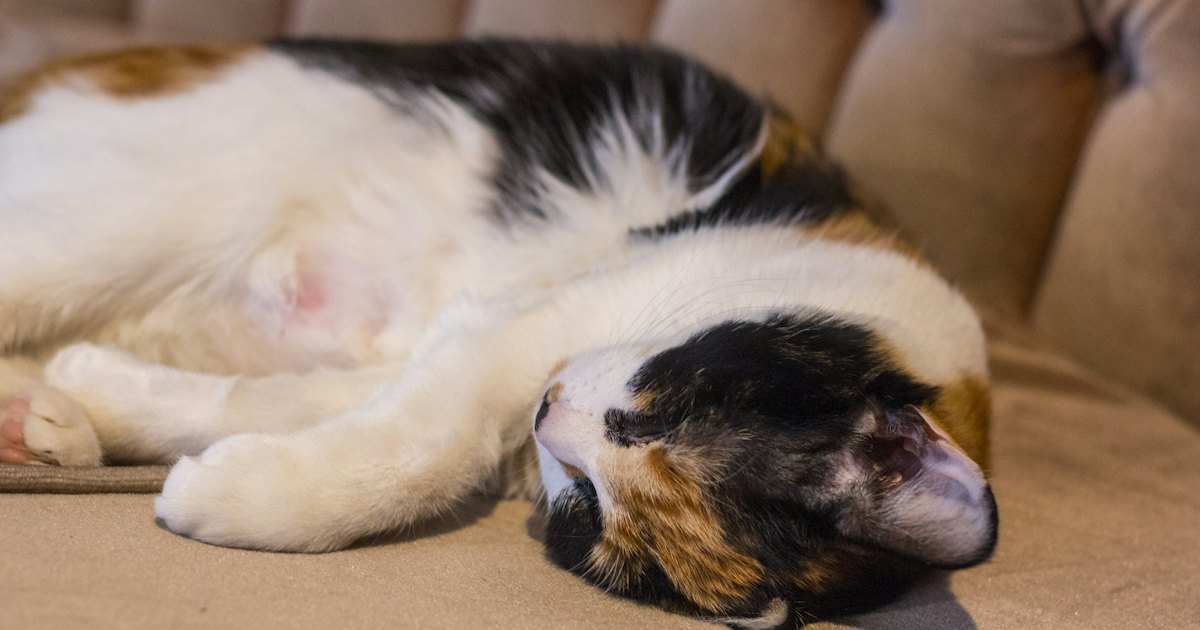
Cats are pregnant for about 63 to 65 days, roughly nine weeks from mating to birth. That window can run a few days shorter or longer depending on the cat and the litter size. A rounder belly and nesting behavior tend to show up in the final weeks, with labor usually starting close to day 63.
On this page
In practice, the clock starts at mating, not at the moment you first notice something is different. Most owners only catch the early clues — a pinker nipple, a slightly fuller flank — around week three. By the calendar, that makes the pregnancy feel shorter than it really is.
Cat Translator
What if you answered
in her own language?
Cat Translator gives you a playful answer in seconds — on the iPhone you already have.

PetTalk — Pet Translator
4.51,246+ ratingsFree


The 30-Second Pregnancy Check
Before you call the vet, run through this quick check. None of these signs confirm pregnancy on their own, but together they're a strong hint.
- Nipples turn pink and swell, usually one of the earliest visible signs of pregnancy.
- Appetite climbs noticeably, often before any visible weight gain.
- Behavior shifts toward calmer and more affectionate, or occasionally more clingy.
- Belly rounds out gradually, most obvious from week 5 onward.
Cat Pregnancy Timeline at a Glance
Here's the same timeline in table form, so you can jump straight to the week that matches what you're seeing.
| Week | What's Happening | What You Might Notice |
|---|---|---|
| Weeks 1-2 | Fertilization and early embryo implantation | Usually no visible signs |
| Week 3 | Nipples enlarge and turn pink ("pinking up") | First visible sign for most queens |
| Weeks 4-5 | Rapid fetal growth begins, appetite rises | Visibly rounder belly, weight gain |
| Weeks 6-7 | Kittens become easier to feel, abdomen distends | Nesting behavior, slower movement |
| Days 58-63 | Final growth spurt before birth | Restlessness, heavy nesting, labor often begins |
Step 1: Confirm the Pregnancy Early (Weeks 1-3)
The first three weeks rarely show anything you can see from across the room. Implantation happens early on, and the earliest physical sign — pink, swollen nipples — tends to show up over the following weeks.
A vet can confirm the pregnancy by gently feeling the abdomen a few weeks in, or with an ultrasound a little later for a clearer read. Pressing on her belly yourself is risky this early, since it can injure the developing kittens. Leave the palpation to a vet.
Cat Translator
Still reading about the signs?
Open Cat Translator and try a recording next time your cat talks. Free on iPhone, iOS 16 or newer.
PetTalk — Pet Translator
4.51,246+ ratingsFree
Step 2: Track the Mid-Pregnancy Growth (Weeks 3-6)
From week three through six, the pregnancy becomes obvious. Appetite rises fast, and most queens need noticeably more food by week five. Weigh her weekly if you can — a steady climb is normal, and a sudden drop is not.
If she seems chattier or more vocal at this stage, that's often simple communication, not distress. PetTalk — Pet Translator (free on the App Store, iOS 16+) listens to a recorded meow or yowl and returns a plain-English read in a few seconds, with the sound processed on the device instead of uploaded anywhere. Open the app, add her as a profile with her breed and age, then record the next odd-sounding call so you can compare it against her usual ones.
Step 3: Prepare the Nesting Box (Weeks 6-8)
By week six, kittens are big enough to feel through the abdomen, and she'll likely start scouting nesting spots — a closet, a drawer, under the bed. Set out a low-sided box lined with a towel in a quiet corner before she picks a less convenient one herself.
A heavily pregnant cat often avoids a litter box that feels too exposed or too dirty, right when she needs it most. If kittens are weeks away, check how often you should change the litter box and keep her box cleaner than usual through the final month.
Step 4: Recognize the Signs Labor Is Close (Days 58-65)
In the last few days before day 63, most queens get restless, stop eating as much, and groom their belly more than usual. Heavy nesting and pacing are the most common signs that labor is within a day.
Hormonal swings can also make her short with other pets in the house. If she starts hissing at a cat she normally tolerates, why cats hiss at other cats in the home usually settles back down once the kittens arrive. Call your vet if she's straining hard without delivering a kitten.
Cat Translator
Still reading about the signs?
Open Cat Translator and try a recording next time your cat talks. Free on iPhone, iOS 16 or newer.
PetTalk — Pet Translator
4.51,246+ ratingsFree
Frequently Asked Questions
How long is a cat pregnant?
A cat is pregnant for about 63 to 65 days, close to nine weeks total. The exact length can vary a little from cat to cat, and first-time queens sometimes go a day or two longer. Anything that runs well outside the usual range is worth a vet check, since it can signal a problem rather than normal variation.
How many kittens do cats usually have?
Litter size varies a lot by breed, age, and how many litters the queen has had before. A vet can estimate the count by palpating the abdomen partway through the pregnancy, or confirm it with an ultrasound or x-ray later on. Guessing by belly size alone is unreliable, especially with a litter of only one or two kittens.
How can I tell if my cat is pregnant?
The earliest reliable sign is nipples that turn pink and swell, usually around day 15 to 18 after mating. Appetite and weight typically increase over the following weeks, and her belly rounds out by month two. A vet visit around week three gives the most accurate confirmation, through gentle palpation or an ultrasound.
What are the signs that labor is starting?
Restlessness, repeated nesting, and a drop in appetite are the clearest signs labor is close, usually within a day of day 63. Many queens also groom their belly more and seek out a quiet, hidden spot. Contractions and a clear or slightly bloody discharge mean kittens are likely to arrive within hours.
Should I take my pregnant cat to the vet?
Yes. Most vets recommend at least one checkup early in the pregnancy to confirm it and estimate a due date, plus a follow-up visit as she nears the end to check on the kittens. Call your vet right away if hard straining continues for a while without a kitten arriving, or if she seems distressed.
Can a cat get pregnant again right after giving birth?
Yes — a queen can go back into heat and get pregnant again within days of giving birth, even while still nursing. Spaying her once the current litter is weaned is the usual way owners avoid back-to-back pregnancies. Talk to your vet about timing if you're not planning to breed her again.