What Do Cat Sounds Mean? A Guide to Every Noise Your Cat Makes
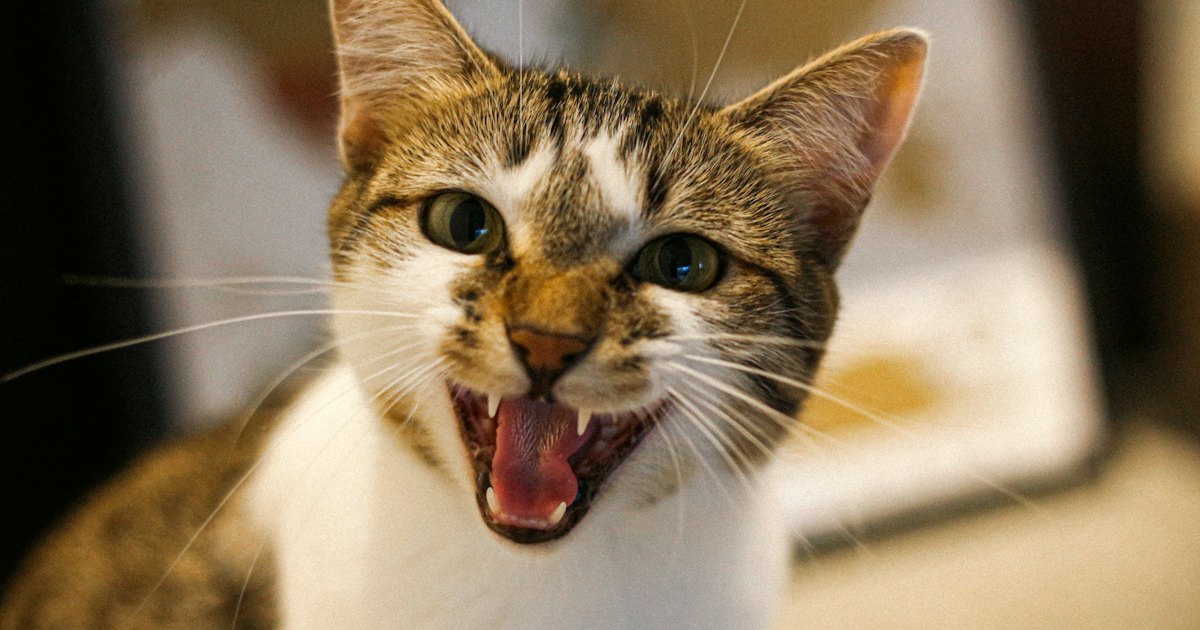
Cat sounds break down into six main types, and each one carries a different message. Short meows greet you or ask for food. Purrs usually signal comfort, though a tense purr can mean self-soothing. Chirps and trills show excitement. Hisses and growls ask for space. Yowls often signal distress, a mating drive, or confusion in older cats.
On this page
Our own cats make this obvious fast. A siamese leans toward long, demanding meows that carry across a house. A tabby chirps the second a bird lands on the windowsill feeder. A maine coon's 3am yowl sounds nothing like its daytime chatter. Context changes the read every time: time of day, body posture, and what happened right before the sound.
Cat Translator
What if you answered
in her own language?
Cat Translator gives you a playful answer in seconds — on the iPhone you already have.

PetTalk — Pet Translator
4.51,246+ ratingsFree


The 30-Second Cat Sound Check
Short on time? Run through this list before you dig into the full breakdown below.
- Is the sound short and high-pitched? Likely a greeting or a small request.
- Is it loud, long, and repeated? Your cat wants something right now — food, attention, or the door.
- Is there a hiss, spit, or low growl? Back off and give space.
- Is the sound wet, raspy, or paired with labored breathing? That's a health flag, not a behavior one — see a vet.
Want it narrowed down for your actual cat instead of skimming a list? Our cat sound decoder is a free, three-tap tool: pick the sound, the posture, and what's happening right now, and it returns one read instead of six rows to compare.
Method 1: Identify the Sound Type First
Most adult cat sounds sort into one of six buckets. Pitch, length, and how often a sound repeats change the meaning as much as the sound itself. A single short meow at your feet reads very differently from the same meow repeated ten times at the pantry door.
| Sound | What it usually means | What to try |
|---|---|---|
| Short meow | Greeting or a small request | Answer it; check food, water, litter |
| Long, repeated meow | A stronger demand or frustration | Meet the need or redirect with play |
| Purr, relaxed body | Comfort and contentment | Enjoy it |
| Purr, tense body | Self-soothing under stress | Check what nearby might be stressing them |
| Chirp or trill | Excited greeting, or prey drive at a window | Nothing to fix — it's a happy sound |
| Hiss or growl | "Back off" — fear, pain, or territory | Give space; never force contact |
| Yowl at night | Common in older cats or unspayed females | Rule out hearing loss or cognitive change with a vet |
| Jaw chatter | Prey-drive frustration at glass or a screen | Normal; offer a toy to release the drive |
If your cat is still young, this list shifts. Kittens add their own range of mews and distress calls — our guide to kitten sounds and what they mean covers that stage sound by sound.
Want a faster read on one specific sound instead of cross-checking a table? Cat Translator, listed on the App Store as PetTalk - Pet Translator, records the sound and returns a playful, one-line guess in seconds, right on your iPhone.
Method 2: Read the Body Language Around the Sound
The same meow means different things depending on what the rest of the cat is doing. Ears, tail, and posture carry as much signal as the sound.
- Ears forward, tail up: calm and curious.
- Ears back, body low: scared or defensive.
- Slow blink, loose body: relaxed and content.
- Puffed tail, arched back: alarmed, give room.
If a hiss or growl only shows up around a new arrival, see our guide on cat hissing and growling at a new kitten for a realistic settling-in timeline.
Cat Translator
Still reading about the signs?
Open Cat Translator and try a recording next time your cat talks. Free on iPhone, iOS 16 or newer.
PetTalk — Pet Translator
4.51,246+ ratingsFree
Method 3: Track the Pattern, Not Just One Sound
One yowl at 2am tells you very little on its own. Three nights of the same yowl is a pattern worth acting on; one night usually is not.
Keep a short log for about a week: the time, what happened right before, and what happened right after. Patterns around feeding time, the litter box, or a closed door usually surface fast once you write them down instead of guessing from memory.
A wet, congested, or raspy-sounding cry is a different problem than a behavioral one. Our piece on kitten sounds congested after eating walks through when that points to a health issue instead of a message.
Some owners skip the guessing step entirely and teach their cat pet communication buttons instead. Tapping a word button removes the interpretation step altogether, though it takes weeks of training to get there.
Method 4: Get an Instant Read with an App
Logging sounds over days works, but it is slow. An app gives you an instant guess on the sound you just heard, which is useful when you cannot wait a week to find out.
Cat Translator, listed on the App Store as PetTalk - Pet Translator, analyzes acoustic properties — pitch, frequency, duration, and intensity — against a database built on animal behavior research. The recording is processed on the device and is not uploaded anywhere.
- Download PetTalk - Pet Translator on your iPhone or iPad (iOS 16 or newer).
- Create a cat profile with name, breed — Siamese, Persian, Tabby, Maine Coon — and age.
- Hold your device near your cat when they vocalize.
- Tap record and let the full sound finish.
- Review the translation and save it to Sound History to compare later.
It's built for awareness, not diagnosis — the developer's own disclaimer says as much. A sudden change in vocalizing still calls for an actual vet visit, not just a translation.
PetTalk - Pet Translator is free to download, rated 4.5 out of 5 from 1,200+ ratings on the App Store, and runs on an iPhone or iPad with iOS 16 or newer.
Cat Translator
Still reading about the signs?
Open Cat Translator and try a recording next time your cat talks. Free on iPhone, iOS 16 or newer.
PetTalk — Pet Translator
4.51,246+ ratingsFree
Frequently Asked Questions
What does it mean when a cat chirps or chatters at a window?
Chirping or chattering almost always means your cat spotted prey — a bird, squirrel, or insect — through the glass. The clicking jaw combined with a short chirp reflects a hunting instinct that has nowhere to go. It isn't distress. Offering a toy right after can redirect that drive into real play.
Why does my cat yowl at night?
Night yowling is common in older cats and in unspayed females going through a heat cycle. It can also point to disorientation in a senior cat with vision or hearing loss. A vet visit rules out cognitive decline or a thyroid change before you assume it's just a phase.
Is purring always a sign a cat is happy?
No — purring usually signals comfort, but cats also purr when tense, in pain, or self-soothing during a vet visit or car ride. Check the body alongside the sound. A relaxed purr comes with loose posture and slow blinking, while a stressed purr comes with a tucked body and flattened ears.
What does a cat's growl or hiss mean?
A growl or hiss is a warning, not an attack. It tells you, or another animal, to back off right now, usually from fear, pain, or a territory dispute. Give the cat space and avoid forcing contact. Most hissing stops once the perceived threat moves away on its own.
Can an app really tell me what my cat is saying?
An app like PetTalk - Pet Translator gives a playful, acoustic-based guess, not a verified translation — no tool can read an animal's mind. It's built for awareness and fun rather than diagnosis, and the developer's own listing frames it that way. Treat the result as a starting point, not a verdict.