Can Cats Eat Chocolate? What to Do If Your Cat Already Did
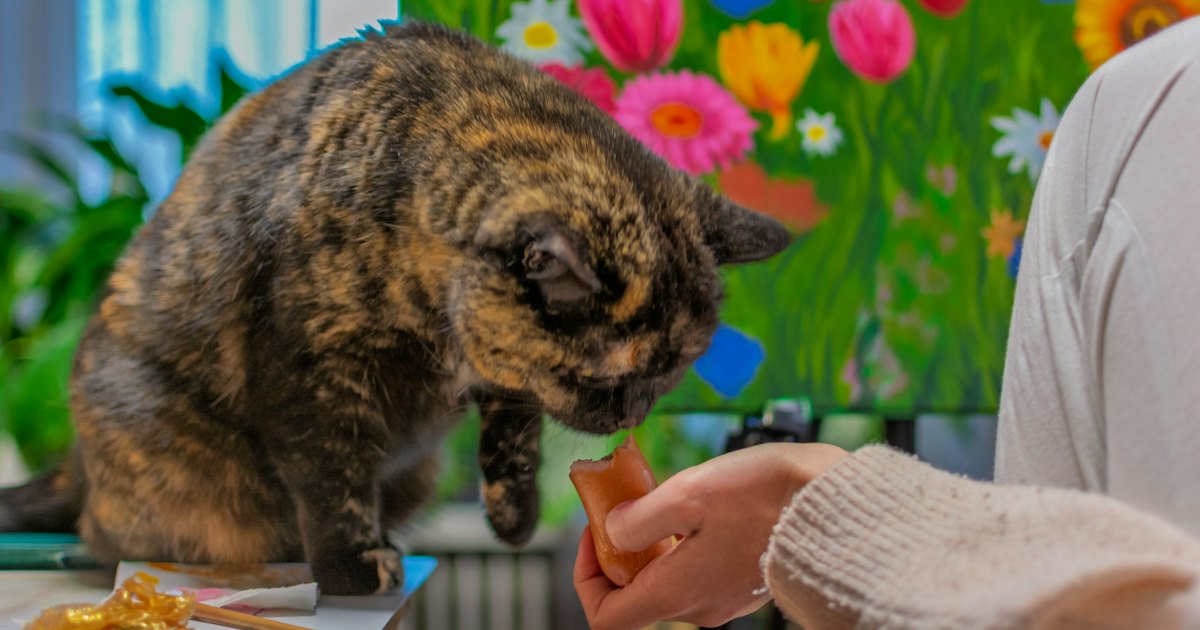
No, cats should never eat chocolate. It contains theobromine and caffeine, stimulants a cat's liver clears far more slowly than ours. Even a small amount of dark chocolate can push a small cat into a dangerous dose. If your cat already ate some, the type and amount decide how urgent the next hour is.
On this page
Chocolate exposure tends to follow a predictable pattern: a wrapper goes missing from the counter, or a bar gets left out on a low table, often around holidays when candy is more visible around the house. It's usually a small amount — a few stolen chocolate chips or a corner bitten off a bar, not a whole box — but size still matters. A cat weighing around 4 kg reacts to the same gram of cocoa far more strongly than a much larger dog would.
Cat Translator
What if you answered
in her own language?
Cat Translator gives you a playful answer in seconds — on the iPhone you already have.

PetTalk — Pet Translator
4.51,246+ ratingsFree


The 30-Second Chocolate Check
Run this before you panic or decide to just wait it out. It takes about 30 seconds and tells you how urgent the next step really is.
- What kind: white chocolate carries the least theobromine; unsweetened baking chocolate and cocoa powder carry the most.
- How much: a lick off a finger is a very different case from a half-eaten candy bar.
- Cat's size: a kitten or a cat under 4 kg has far less margin for error than a big tom.
- Time since eating: minutes matter less than you'd think, because symptoms often build over hours, not minutes.
If two or more of those point toward 'a lot, in a small cat, of the dark stuff,' stop reading. Call your vet now — the rest of this guide still applies, but do that first.
While you're waiting on a callback, your cat may pace, meow more than usual, or duck under the bed. That's nerves, not automatically more poisoning. If you're curious what the extra meows and chirps might mean, in a playful sense, give PetTalk - Pet Translator a try. It records the sound and returns a reading in seconds, processed on the phone, with nothing uploaded. Treat it as entertainment — the vet call above is the part that actually protects your cat.
Step 1: Figure Out What and How Much Chocolate Your Cat Ate
Before you call anyone, look at what's missing. Grab the wrapper if there is one — it usually names the type of chocolate and sometimes the bar's weight. Note roughly how big a piece disappeared: a few crumbs, half a square, or most of the bar.
| Chocolate type | Theobromine level | Typical risk |
|---|---|---|
| White chocolate | Lowest | Usually just mild stomach upset, from the sugar and fat rather than the chocolate itself |
| Milk chocolate | Low to moderate | A big piece can cause vomiting or diarrhea; a full bar eaten by a small cat is a vet call |
| Dark or semi-sweet chocolate | Higher | Dangerous in a much smaller amount than milk chocolate — call your vet |
| Unsweetened baking chocolate or cocoa powder | Highest | The most dangerous per gram; even a small taste is worth a call |
Weigh your cat if you can, or use a recent number from the vet's chart. A vet or poison-control line will ask for your cat's weight, the type of chocolate, and roughly how much went missing.
What About Brownies, Chocolate Chip Cookies, or Hot Cocoa Mix?
Mixed foods complicate things because they add other problems: raisins in some cookies, nuts in brownies, or extra sugar and caffeine in hot cocoa mix. Treat any chocolate-containing baked good the same way as a plain bar. Work out how much actual chocolate is in it, then follow the steps here. Chocolate bars sweetened with xylitol instead of sugar, sold as 'sugar-free,' add a second toxin on top of the theobromine. Treat those as more urgent, not less.
Step 2: Call Your Vet or an Animal Poison Control Line Right Away
Call your regular vet first. If it's after hours, call the nearest emergency animal hospital instead of waiting until morning.
A pet poison control service is a solid backup when you can't reach either one. The ASPCA Animal Poison Control Center is built for exactly this kind of call. A vet visit is still the right move if your cat shows any of the symptoms below.
Don't try to make your cat vomit at home without guidance. Doing it safely is harder in cats than in dogs, and getting it wrong can cause more harm than the chocolate itself. Let your vet or the poison-control line decide whether that's even the right move.
Cat Translator
Still reading about the signs?
Open Cat Translator and try a recording next time your cat talks. Free on iPhone, iOS 16 or newer.
PetTalk — Pet Translator
4.51,246+ ratingsFree
Step 3: Watch for the Signs of Chocolate Poisoning
Mild cases look like a plain upset stomach: vomiting, diarrhea, or just skipping a meal. Theobromine clears from a cat's system slowly, so symptoms can show up later than you'd expect, not right away.
- Vomiting or diarrhea
- Restlessness or unusual hyperactivity
- Increased thirst and more trips to the litter box
- Faster breathing or a racing heartbeat
- Tremors, in more serious cases
Some cats also get more vocal after something like this — extra meowing, yowling, or a low growl that's not their usual sound. Our guide to what different cat sounds mean walks through which noises tend to signal pain or distress. If you want a quick, playful read on an unfamiliar sound once the vet visit is behind you, try PetTalk - Pet Translator. Just don't use it instead of the call above.
Step 4: Treat It as an Emergency if Your Cat Shows Any of These Signs
Tremors, seizures, a racing heartbeat, or collapse mean stop calling around and get to an emergency vet now. Don't wait on a callback once you see any of those.
A cat that licked a little frosting and still seems completely normal is a different case. A cat that ate a quarter of a dark chocolate bar, and is now panting and restless, is not. Mild tastes often resolve with vet-guided monitoring at home; the signs above don't.
Cats in pain often change how they rest, too. Our guide to cat sleeping positions covers what's normal and what's worth a second look if yours suddenly won't settle in its usual spot.
Step 5: Chocolate-Proof Your Kitchen So It Doesn't Happen Again
Most chocolate incidents start the same way: something sweet gets left within reach while someone's back is turned.
- Keep chocolate in a closed cabinet, not a counter bowl or an open pantry shelf
- Store baking chocolate and cocoa powder with the other baking supplies, behind a door, not in a bottom drawer a cat can paw open
- Warn guests during holidays — candy dishes and gift boxes are an easy, overlooked source
- Give a food-driven cat something else to focus on instead of the kitchen counter
That last point is where a little redirection helps. PetTalk - Pet Translator includes interactive games built around a cat's hunting and curiosity instincts. That's a safer outlet for a counter-jumping, food-motivated cat than circling the kitchen island during baking. It won't stop a determined cat on its own, but it gives you something to redirect to.
Cat Translator
Still reading about the signs?
Open Cat Translator and try a recording next time your cat talks. Free on iPhone, iOS 16 or newer.
PetTalk — Pet Translator
4.51,246+ ratingsFree
Frequently Asked Questions
Can cats have chocolate at all, even a small taste?
No — even a small taste isn't worth the risk. Cats lack the taste receptors for sweetness and have no real reason to seek out chocolate. So a cat that eats some usually grabbed it by accident. A single lick rarely causes serious poisoning, but it's still worth watching your cat for a few hours.
Is chocolate bad for cats in every amount?
Yes, in the sense that no amount is truly necessary or risk-free for a cat. A lick of frosting usually causes nothing worse than an upset stomach. Larger amounts, especially of dark or baking chocolate, can bring on the more serious symptoms described above and are worth a vet call.
Can cats eat chocolate ice cream?
No. Chocolate ice cream combines two problems for a cat: theobromine from the chocolate and lactose from the dairy, which most adult cats digest poorly. The chocolate content is usually low, but the combination still tends to cause vomiting or diarrhea, so it isn't worth offering.
What are the first signs of chocolate poisoning in cats?
The first signs are usually vomiting, diarrhea, and restlessness, sometimes alongside unusual vocalizing. More serious cases add a racing heartbeat, fast breathing, or tremors. Signs can take a few hours to appear, so a cat that seems fine right after eating chocolate isn't automatically in the clear.
How do I cat-proof my kitchen against chocolate?
Start by closing off anything with a lid or a door — cabinets instead of counters, closed bins instead of open fruit bowls. Keep baking chocolate and cocoa powder with the other baking supplies, out of paw's reach. Ask guests to keep candy dishes off low tables during the holidays.