How to Keep Cats From Scratching Furniture
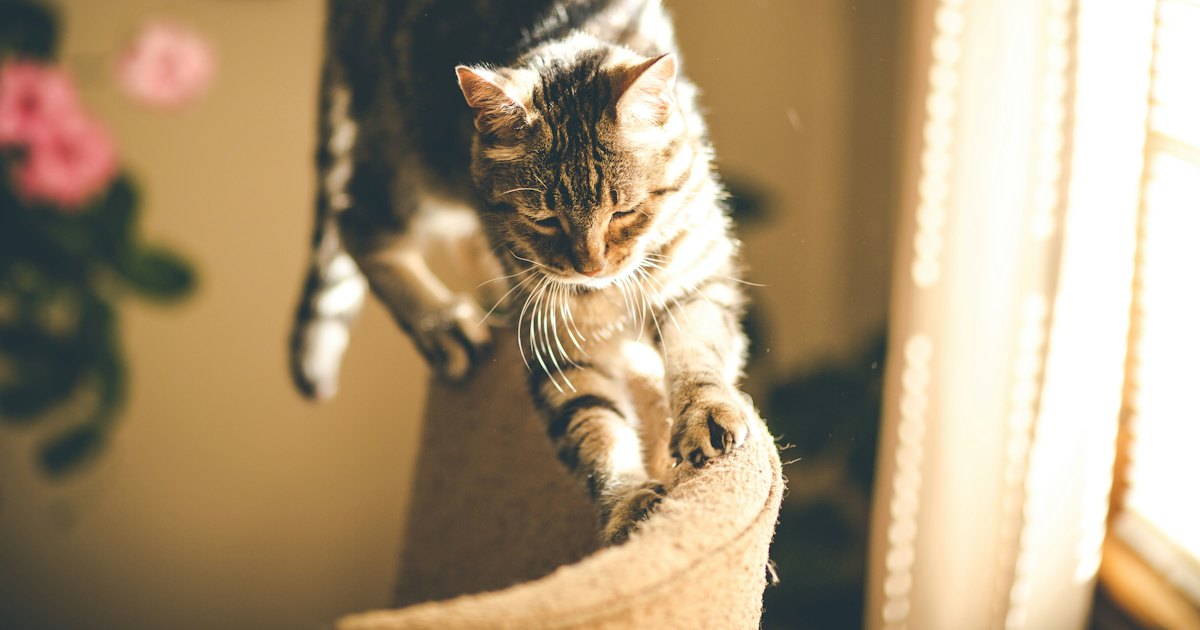
The fastest fix is a stable, vertical scratching post covered in sisal rope or cardboard, placed right next to the furniture your cat already targets. Trim claws every 10 to 14 days and add a double-sided tape deterrent to that spot. Reward every use of the new post. Most cats switch over within a week.
On this page
In our experience helping cat owners troubleshoot scratching complaints, the posts that fail are almost always too short, too wobbly, or stashed in a spare room no one visits. Cats scratch where they live, not where it's convenient for us to hide a post.
Cat Translator
What if you answered
in her own language?
Cat Translator gives you a playful answer in seconds — on the iPhone you already have.

PetTalk — Pet Translator
4.51,246+ ratingsFree


Why Do Cats Scratch Furniture in the First Place?
Scratching is not misbehavior. It's grooming, marking, and stretching rolled into one motion. Cats have scent glands in their paws, so every scratch leaves a chemical signature along with the visible marks.
Furniture usually loses because it sits in high-traffic spots: a couch arm by the front door, a chair leg near a window. Those are exactly the locations a cat wants to mark first. Stress, boredom, and overgrown claws can all push the behavior further. That's why the fix below covers more than just buying a post.
For a broader overview of destructive scratching, see the ASPCA's guide to common cat behavior issues.
The 30-Second Scratch-Trigger Check
Before changing anything, watch where your cat scratches and when. Three details narrow down the fix fast:
- Which piece of furniture gets hit — is it near a door, window, or another cat's favorite spot?
- Time of day — right after waking, before meals, or mid-play?
- Claw condition — do the nails look long, split, or catch on fabric?
Scratching near windows or doorways usually points to territory marking. Scratching mid-play points to pent-up energy you can redirect instead.
Method 1: Give Your Cat a Scratching Post It Actually Wants to Use
A scratching post only works if it beats the furniture on height, stability, and texture. Most posts sold in pet stores are too short. Look for one tall enough that an adult cat can fully extend its body while scratching, rather than one it has to hunch to use.
Stability matters just as much. A post that wobbles or tips over on the first try gets abandoned fast, and some cats never go back to it. Weight the base, bolt it to a wall stud, or choose a post with a wide, heavy platform.
Texture is personal. Some cats prefer sisal rope wound tight, others go for corrugated cardboard, and a smaller group prefers woven carpet. The table below breaks down what each material tends to attract, and what to watch for.
| Material | Why Cats Like It | Watch For |
|---|---|---|
| Sisal rope | Coarse grain holds up to daily scratching | Eventually needs re-wrapping with heavy use |
| Corrugated cardboard | Cheap, replaceable, a favorite for horizontal scratchers | Wears out fastest and sheds cardboard bits |
| Woven carpet | Familiar texture for cats raised around carpet | Can train a cat to scratch your actual carpet too |
| Bark or wood | Mimics scratching a tree trunk outdoors | Heavier and pricier than rope or cardboard posts |
Placement decides whether the post gets used at all. Put the first one directly beside the furniture your cat already scratches, not across the room where it looks tidier. Add a second post near a window or wherever your cat naps, since cats often stretch and scratch right after waking.
Method 2: Trim Claws and Consider Nail Caps
Shorter, blunter claws do less damage even when a cat does scratch the wrong thing. Trim the tips every 10 to 14 days, cutting only the clear, pointed hook and avoiding the pink quick underneath.
If trimming at home feels risky, a groomer or vet tech can do it in a few minutes. Soft nail caps, glued on over trimmed claws, blunt the damage further. They typically need replacing every 4 to 6 weeks as claws grow and shed their sheaths.
Caps and trims treat the symptom, not the instinct. Pair them with a post your cat actually likes, or the urge to scratch just moves to the next soft surface in the house.
Cat Translator
Still reading about the signs?
Open Cat Translator and try a recording next time your cat talks. Free on iPhone, iOS 16 or newer.
PetTalk — Pet Translator
4.51,246+ ratingsFree
Method 3: Make the Furniture Itself Less Appealing
While the new post earns trust, make the old target less inviting. Double-sided tape, aluminum foil, or a plastic carpet runner turned spike-side up all change the texture a cat feels on the first scratch. Most cats dislike that enough to try somewhere else.
Citrus-scented sprays work on some cats, since many dislike the smell, but results vary enough that it shouldn't be your only fix. Furniture covers or corner guards buy time on an expensive piece while the training above takes hold.
Remove deterrents gradually, not all at once, once your cat has used the new post consistently for two weeks. Pulling everything away too soon just reopens the old habit.
Method 4: Redirect the Instinct With Play and Enrichment
Scratching that spikes during play, after a nap, or when your cat seems bored usually responds best to redirected energy rather than more deterrents. A short, active play session before the hours your cat normally scratches can burn off that same drive.
Interactive play that taps hunting, chasing, and comfort-seeking instincts works well here. Those are the same instincts behind most scratching.
Reading the sound your cat makes in the moment helps too. Our guide on what cat sounds mean breaks down the basics. PetTalk - Pet Translator records a meow, purr, or chirp and returns an on-device interpretation within seconds — no audio gets uploaded anywhere. It won't stop the scratching by itself. But it can help you tell whether your cat is bored, excited, or asking for play before the couch becomes the outlet.
Method 5: Know When It's More Than a Scratching Problem
Sudden, aggressive scratching paired with hiding, over-grooming, or a change in appetite can point to stress or pain rather than a simple habit. Multi-cat households often see a scratching spike tied to tension between cats rather than the furniture itself.
If the scratching ramps up right after a stand-off with another cat in the house, that's a territorial stress signal worth reading on its own. See our guide on why your cat is hissing at your other cat for the social side of multi-cat tension.
Declawing is not a recommended fix. It removes the last bone of each toe, not just the nail. Major veterinary groups such as the AVMA discourage the surgery except as a last resort for a cat's own medical needs. Every method above addresses the same scratching problem without it.
Cat Translator
Still reading about the signs?
Open Cat Translator and try a recording next time your cat talks. Free on iPhone, iOS 16 or newer.
PetTalk — Pet Translator
4.51,246+ ratingsFree
Frequently Asked Questions
Why do cats scratch furniture?
Cats scratch furniture because it's tall, stable, and sits in a spot they already consider their territory. Scratching stretches their muscles, sheds the outer claw sheath, and leaves a scent mark from glands in their paws. Furniture usually just happens to be the most convenient target in the room.
Why do cats scratch at all?
Scratching is a normal, instinct-driven behavior, not bad manners. It conditions claws, stretches the spine and shoulders, and marks territory visually and by scent. Indoor cats without a dedicated outlet redirect that instinct onto whatever surface is nearby, usually furniture, carpet, or doorframes.
Does declawing stop cats from scratching?
Declawing removes the ability to scratch, but it does not remove the instinct or the stress behind it. Major veterinary groups discourage the surgery except for a cat's own medical needs. A scratching post, regular nail trims, and the deterrents above solve the same furniture problem without surgery.
How long does it take to retrain a cat to use a scratching post?
Most cats shift toward a well-placed, sturdy scratching post within about a week once it replaces the furniture they were already using. Cats that are older, more anxious, or dealing with multi-cat tension can take several weeks, especially if the post sits somewhere they rarely visit.
Are nail caps safe for cats?
Nail caps are generally considered safe when sized correctly and applied over trimmed claws. They typically need replacing every 4 to 6 weeks as the claw grows. Caps blunt scratching damage but don't stop the scratching motion itself, so pair them with a post your cat likes.
Will a scratching post stop my cat from scratching the couch completely?
A post placed next to the couch and kept stable usually redirects most scratching within about two weeks, but it rarely stops every instance overnight. Combining the post with a temporary deterrent on the couch, like tape or foil, speeds up the switch.