How to Read Aggressive Cat Body Language
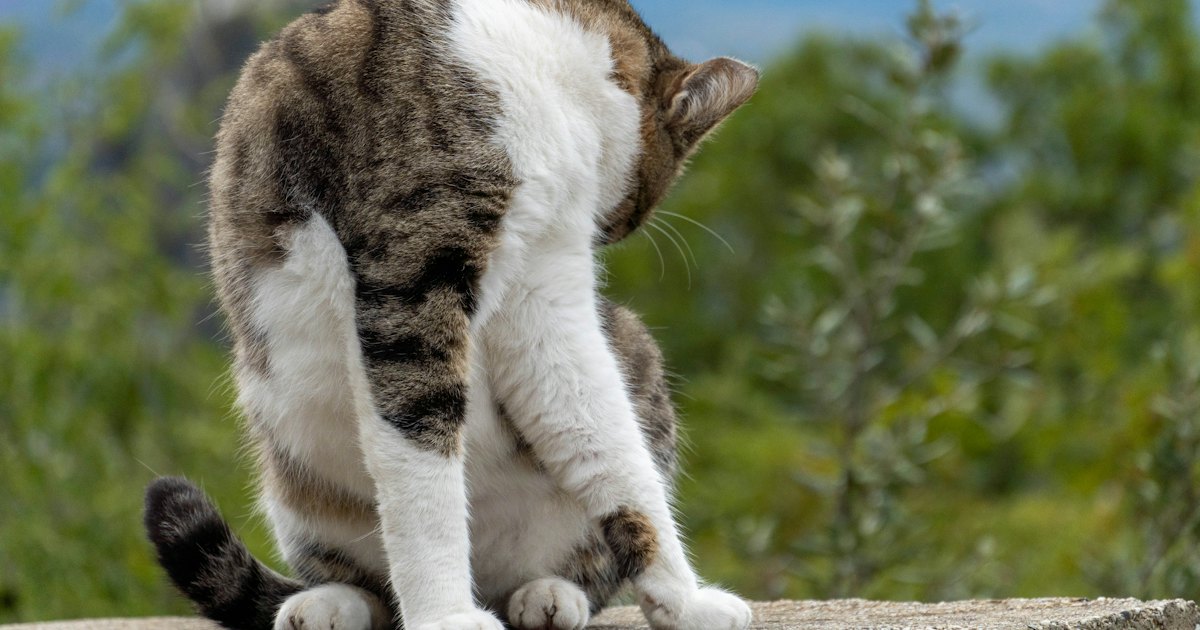
Aggressive cat body language shows up as a stiff body, pinned ears, a thrashing or tucked tail, and a hard stare before a swipe or bite. Offensive cats look bigger and lean in. Defensive cats crouch, hiss, and try to look small. Give space the moment you see these signals, and never punish the posture.
On this page
I keep a short clip folder on my iPhone 14 Pro and my partner’s iPhone 15 for the same reason: a freeze-frame beats a guess mid-argument. Slow-mo at 1× or 0.5× makes ear angle and pupil size obvious in under 10 seconds. The phone is a notepad, not a diagnosis.
Cat Translator
What if you answered
in her own language?
Cat Translator gives you a playful answer in seconds — on the iPhone you already have.

PetTalk — Pet Translator
4.51,246+ ratingsFree


The 30-second body check
Before you name the mood, watch the whole cat for about 30 seconds. One twitch is noise. A held posture is the message.
- Ears: upright and rotated, or flat and pinned?
- Eyes: hard stare with tight pupils, or wide with big round pupils?
- Tail: thrashing, stiff and down, or wrapped tight to the body?
- Body: tall and stiff, or low and crouched with hackles up?
Tall and stiff reads offensive. Low and crouched with a hiss reads defensive. Either way, stop reaching. If the “anger” face lasts for a day or two with hiding or appetite loss, treat it as health first — see our guide to sick cat body language.
Want a playful second take while you practise reading calm meows? Cat Translator — our iPhone app, listed on the App Store as PetTalk — Pet Translator — turns a short recording into a light line in your cat’s imagined voice. It is free to download, needs iOS 16 or newer, and is built for fun, not diagnosis.
Step 1: Separate offense from defense
Aggression is a behavior, not a personality label. The ASPCA’s guide to aggression in cats splits threat postures into offensive and defensive, explaining that an offensive cat “tries to make himself look bigger and more intimidating” while a defensive cat “adopts a self-protective posture and tries to make himself look smaller” — that split changes what you do next.
- Offensive: stiff straight legs, raised rear, direct stare, ears upright with backs rotated forward, fur up, may growl or yowl while moving in.
- Defensive: crouch, head tucked, tail curved in, ears flat sideways or back, wide pupils, open-mouth hiss or spit, may swipe if cornered.
When it won’t apply: a hunting crouch aimed at a toy or bird can look tense without being a threat to you. Check the target of the stare first. Cornering a defensive cat makes the swipe more likely, not less.
Step 2: Read the face before the paws
Ears, eyes, and whiskers move faster than a paw. Catch them early and you often avoid the swipe.
- Pinned or airplane ears: fear, overstimulation, or rising anger — stop petting.
- Hard unblinking stare with tight pupils: challenge or offense.
- Wide round pupils with a low body: fear or defensive arousal.
- Whiskers pushed forward: alert or hunting. Whiskers pulled back flat: fear or defense.
When it won’t apply: dim rooms also widen pupils, so check the light. A slow blink aimed at you is calm trust, not aggression. For the emotion side of the face, see does a cat have emotions.
Step 3: Read tail, fur, and stance together
The tail and coat confirm what the face already said. Read them as one set, not as lone clues.
- Thrashing or whipping tail tip: irritation rising — end the interaction.
- Tail stiff and held low or straight down: common in offensive threat.
- Tail wrapped tight to the body: defensive and self-protective.
- Hackles and bottle-brush tail: high arousal — give an exit path.
When it won’t apply: a vertical quivering tail by the door is often a greeting mark, not a fight invite. Pair it with soft eyes and forward ears before you relax.
Cat Translator
Still reading about the signs?
Open Cat Translator and try a recording next time your cat talks. Free on iPhone, iOS 16 or newer.
PetTalk — Pet Translator
4.51,246+ ratingsFree
Step 4: Give space the safe way
Your job in the next 60 seconds is exit, not education. Punishment after a hiss teaches the cat to skip the warning.
- Stop reaching, talking loudly, or staring back hard.
- Turn sideways, blink soft, and create a clear path out of the room.
- Herd kids and dogs away first — do not break up a cat fight with bare hands.
- Wait until ears rise and the body softens before you offer food or a toy.
When it won’t apply: redirected arousal after a window stare at an outdoor cat can linger for minutes or longer. The Cornell Feline Health Center notes on feline aggression list “seeing an outdoor or stray cat through a window” as a common trigger for redirected aggression, and describe petting-induced aggression as often preceded by “dilated pupils, tail lashing, and ears moved backward” — both need cool-down time, not a hug.
Step 5: Rule out pain before you call it “mean”
Pain, dental disease, arthritis, ear trouble, and thyroid disease can all look like sudden aggression. A cat who used to love laps and now bites on touch needs a vet exam, not a tougher tone.
- New aggression after a fall, fight, or vet visit → book a check.
- Guarding one body part, limping, or flinching on touch → pain until proven otherwise.
- Night yowling plus restlessness in an older cat → medical workup first.
Sound changes can flag the same worry. A raspy kitten meow or congested purr is a health clue, not “attitude” — start with how to tell if kitten meow sounds are raspy or how to tell if kitten purr sounds congested.
Aggressive signals at a glance
Read each row across. One cell alone is not enough.
| Signal cluster | Likely read | What you do |
|---|---|---|
| Stiff legs, direct stare, low stiff tail | Offensive threat | Back away; do not stare or punish |
| Crouch, flat ears, hiss, wide pupils | Defensive / fear | Offer exit; wait it out |
| Tail thrash while being petted | Overstimulated | Stop petting for 2–5 minutes |
| Sudden bite after a window stare | Redirected arousal | Give quiet space; separate pets |
| New bite on a sore spot | Pain until checked | Call your veterinarian |
A playful helper when the mood is calm
You do not need an app to read a stiff stare or a thrashing tail. Eyes and posture do that work. When your cat is soft-eyed and chatting, though, Cat Translator is a fun way to play along.
On the App Store the same app is listed as PetTalk — Pet Translator. The listing describes a simple loop:
- Create a pet profile with name, breed, and age.
- Hold your iPhone near your pet and tap record; analysis runs on the device, with no audio uploaded externally.
- Read the short interpretation in seconds; Sound History keeps past translations.
Download is free. Full access is an optional Annual Plan at $9.99 per year. The US listing shows about a 4.5 rating from 1,000+ ratings. Core features work offline. Results are entertainment interpretations based on acoustic patterns — not a diagnosis. If behavior suddenly shifts, talk to a licensed veterinarian.
Cat Translator
Still reading about the signs?
Open Cat Translator and try a recording next time your cat talks. Free on iPhone, iOS 16 or newer.
PetTalk — Pet Translator
4.51,246+ ratingsFree
Frequently Asked Questions
What does aggressive cat body language look like?
Aggressive cat body language usually means a stiff or crouched body, pinned or rotated ears, a hard stare or wide pupils, and a thrashing or tightly wrapped tail. Offensive cats look bigger and lean in. Defensive cats look smaller, hiss, and may swipe if trapped. Fur standing on end raises the stakes either way.
How can you tell if a cat is about to attack?
A cat about to attack often freezes, stares hard, and holds a stiff or low tense posture for several seconds first. Watch for a thrashing tail tip, flattened ears, and weight shifted forward or coiled. Hissing and open-mouth spitting are late warnings. Stop moving toward the cat the moment those cues stack.
Is hissing always aggressive cat body language?
Hissing is a defensive warning, not proof your cat is “mean.” It usually means “back off” after fear, pain, or overstimulation. Pair the hiss with ears, pupils, and posture before you label it. Punishing a hiss removes the warning and can push the cat straight to a bite next time.
Why does my cat bite after being petted?
Many cats bite after petting because repetitive stroking becomes irritating — a pattern behaviorists call petting-induced aggression. Early tells include a twitching tail, skin ripples, ears flicking, and a head turn toward your hand. Stop at the first tell and try shorter sessions. Sudden new sensitivity on one spot needs a vet check for pain.
When should aggressive body language mean a vet visit?
Book a vet visit when aggression is new, paired with limping, hiding, appetite loss, or guarding a body part. Medical causes include pain, dental disease, arthritis, and other illness. Behavior work starts after a clean exam. Overnight escalation with injury risk also deserves same-day advice from your clinic.
Can an app read aggressive cat body language?
No app replaces watching ears, eyes, tail, and stance in the room. Cat Translator (PetTalk — Pet Translator on the App Store) turns vocalizations into playful on-device lines for entertainment. Use posture cues for safety decisions. Use the app only when everyone is already calm and curious.
Is scratching furniture a sign of aggressive body language?
Usually not. Scratching marks territory and stretches muscles — it is closer to a signature than a threat. Watch the ears and tail at the same time to tell the difference. Our guide to stopping furniture scratching covers posts, placement, and texture fixes that redirect the habit.