Does a Cat Have Emotions?
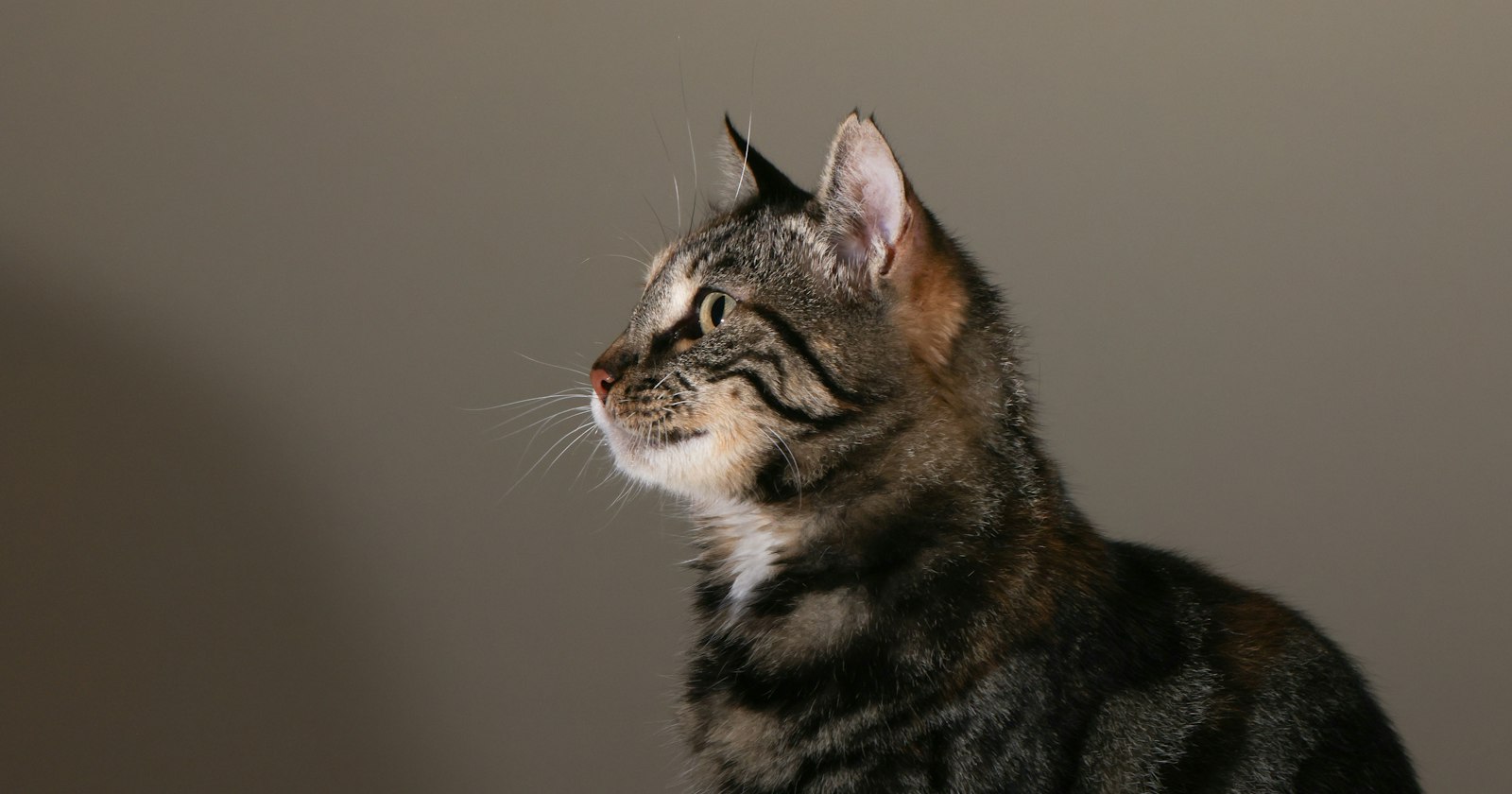
Yes, a cat has real emotions. Cats clearly feel core states like contentment, fear, anger, affection, and frustration, and they show them through the eyes, ears, tail, and voice. Cats likely do not feel complex human emotions such as guilt or spite. Read the whole cat, and watch for sudden changes.
On this page
A cat cannot say "I feel scared" or "I feel happy." Instead, the body does the talking. The same muscles that flick an ear or lash a tail broadcast a feeling in real time. Learn a handful of signs, and you can name a mood before it turns into a scratch or a hiding cat.
The 30-second emotion check
Before you name the feeling, watch the whole cat for about 30 seconds. One quick glance catches a twitch, not a mood. Ask three questions.
- Eyes and ears: soft and forward, or wide with flat, pinned ears?
- Tail: held high and still, or low and lashing side to side?
- Voice: quiet or a soft purr, or yowls, hisses, and growls?
Soft eyes, an upright tail, and a gentle purr read as a content cat. Wide pupils, flat ears, and a lashing tail read as fear or anger. If your cat's normal mood flips for a day or two, treat it as health, not feelings, and call your vet. For the body side, see how to read cat body language. To rate how strong a mood is, put the moment on our cat emotion scale.
Want a lighthearted second opinion while you practise? Cat Translator, our iPhone app, turns a short recording of your cat's meow or purr into a playful, human-style line. It reads sound, not feelings, and it is built for fun, not diagnosis.
Method 1: Spot contentment and happiness
A content cat is the easiest emotion to read, and the one you will see most. A happy cat looks loose all over, with nothing held tight.
- Soft, half-closed eyes and a slow blink aimed your way: calm trust.
- A tail held straight up, sometimes with a little hook at the tip.
- A steady purr during petting, plus kneading paws on a soft lap.
When it won't apply: a cat can purr while tense to self-soothe, so read the purr with the eyes and tail. For the friendly-tail cue, see cat body language tail up, and for the full picture, happy cat body language.
Method 2: Spot fear and anxiety
Fear is the emotion that most often gets a person scratched. A scared cat tries to look small and find an exit before it lashes out.
- Wide, round pupils, even in good light, and ears turned out or flat.
- A crouched body, tucked tail, and weight shifted low to the floor.
- Hissing, a puffed tail, or a fast retreat under the nearest bed.
When it won't apply: pupils also widen in a dim room, so check the light first. A cornered, defensive cat matches the fear posture the ASPCA describes. Give a scared cat space and an exit, and never corner it.
Method 3: Spot anger and frustration
Anger and frustration look tense and forward, not small. An upset cat warns you clearly before it swipes, so watch for the signs.
- A hard, unblinking stare with ears pinned flat and back.
- A stiff, still body, then a tail that thumps or lashes hard.
- A low growl or an open-mouth hiss with teeth showing.
When it won't apply: a cat that lashes its tail during play is aroused, not angry, so read the whole scene. For the full breakdown, see angry cat body language. Back off and let the cat reset before you touch it.
Method 4: Spot affection and trust
Affection is a real feeling, and cats show it in quiet, easy-to-miss ways. A cat that trusts you shares space and scent freely.
- Head-bumps and cheek rubs against your hand, leg, or chin.
- A slow blink from across the room, the cat version of a soft hello.
- Following you between rooms and settling nearby to sleep.
In my experience, the slow blink is the surest sign a cat feels safe with you. Blink slowly back to answer it. When it won't apply: a very shy cat may love you and still keep its distance, so trust builds on the cat's clock, not yours.
Method 5: Know the limits of cat emotions
Cats feel plenty, but not everything people read into them. Being honest about the limits keeps you from misreading your cat.
- Guilt: no clear evidence cats feel it. That "guilty" look is fear of your tone.
- Spite: a cat that pees on your bed is stressed or ill, not vengeful.
- Complex planning: cats live in the moment more than we assume.
This is one opinion backed by behavior, not a settled fact about a cat's inner life. When a cat acts "off," check for stress or a health issue first. The Cornell Feline Health Center is a solid, vet-run source for the health side.
Cat Translator
Curious what that meow means?
Cat Translator gives you a playful answer in seconds — on the iPhone you already have.

PetTalk — Pet Translator
4.51,245 ratingson the App Store
 Point your camera to install
Cat emotions at a glance
Read each row across, not one cell alone. Signals confirm a feeling more than any single cue announces one.
| Emotion | How the cat looks | What to do |
|---|---|---|
| Content | Soft eyes, tail up, gentle purr | Greet or gently pet |
| Affectionate | Head-bumps, slow blinks, follows you | Blink back, share space |
| Anxious | Ears sideways, crouched, tucked tail | Give space, stay calm |
| Scared | Big round pupils, flat ears, hiding | Offer an exit, do not corner |
| Angry | Hard stare, pinned ears, lashing tail | Back off, do not touch |
Emotions read the moment, not a diagnosis. A mood that stays stuck for a day or two, or a big change in an older cat, is a vet question. Pair this with the wider map in cat behavior explained.
Cat Translator
Still reading about the signs?
Open Cat Translator and try a recording next time your cat talks. Free on iPhone, iOS 16 or newer.
PetTalk — Pet Translator
PetTalk — Pet Translator · Free · iOS 16+
Point your camera to installA playful helper: Cat Translator
You do not need an app to read a cat's emotions; the five methods above do the real work. When your cat is curled up with soft eyes and a steady purr, though, Cat Translator — our iPhone app, listed on the App Store as PetTalk — Pet Translator — is a fun way to play along. It covers both cats and dogs, and it is built for entertainment, not diagnosis.
The listing describes a simple loop:
- Hold your iPhone near your cat and tap record; the listing says analysis runs on the device, with no audio uploaded.
- Read the light, human-style line it returns in seconds; every translation saves to your Sound History.
The listing shows the app is free to download and runs on iPhone with iOS 16 or newer, with an optional plan at $9.99 a year for full access. Keep the emotion cues for anything that matters, read the app's story on our about page, and for one more angle, see cat face emotions.
Frequently Asked Questions
Do cats have feelings?
Yes, cats have feelings. They show clear, observable emotions such as contentment, fear, anger, and affection through their eyes, ears, tail, and voice. What is harder to prove is whether cats feel complex, self-aware emotions the way people do. Read the whole cat at once, since one cue rarely tells the full mood on its own.
What emotions do cats feel?
Cats reliably show a handful of core emotions: contentment, curiosity, fear, anxiety, anger or frustration, and affection. Each one comes with its own mix of eye, ear, tail, and vocal signals. A relaxed cat looks loose and blinks slowly, while a scared or angry cat looks tense, with flat ears and wide pupils. Watch the signals together.
Do cats feel love for their owners?
Cats form real bonds and show affection to the people they trust. Head-bumps, cheek rubs, slow blinks, kneading, and following you from room to room are all signs of that bond. It may not look like human love, but it is a genuine attachment. A shy cat can feel it and still keep its distance.
Do cats feel guilt or spite?
There is no clear evidence that cats feel guilt or spite. The "guilty" look after an accident is usually fear of your tone or body language, not remorse. A cat that pees outside the box is far more likely stressed, unwell, or unhappy with the litter setup than vengeful. Look for a cause instead of a grudge.
Can cats feel sad or depressed?
Yes, cats can seem low, especially after a loss, a move, or a big routine change. Signs include hiding, less play, poor appetite, over-grooming, or extra sleep. Because these also point to illness, treat a lasting low mood as a health question first. If it lasts more than a day or two, call your vet.
Do cats have the same emotions as humans?
No, cats do not have the exact same emotions as humans. They share basic feelings like fear, contentment, and affection, but they likely lack complex, self-conscious emotions such as guilt, embarrassment, or long-term jealousy. Reading your cat works best when you watch its own body language instead of expecting a human reaction to a human situation.