Why Does My Cat Lick Me Then Bite Me?
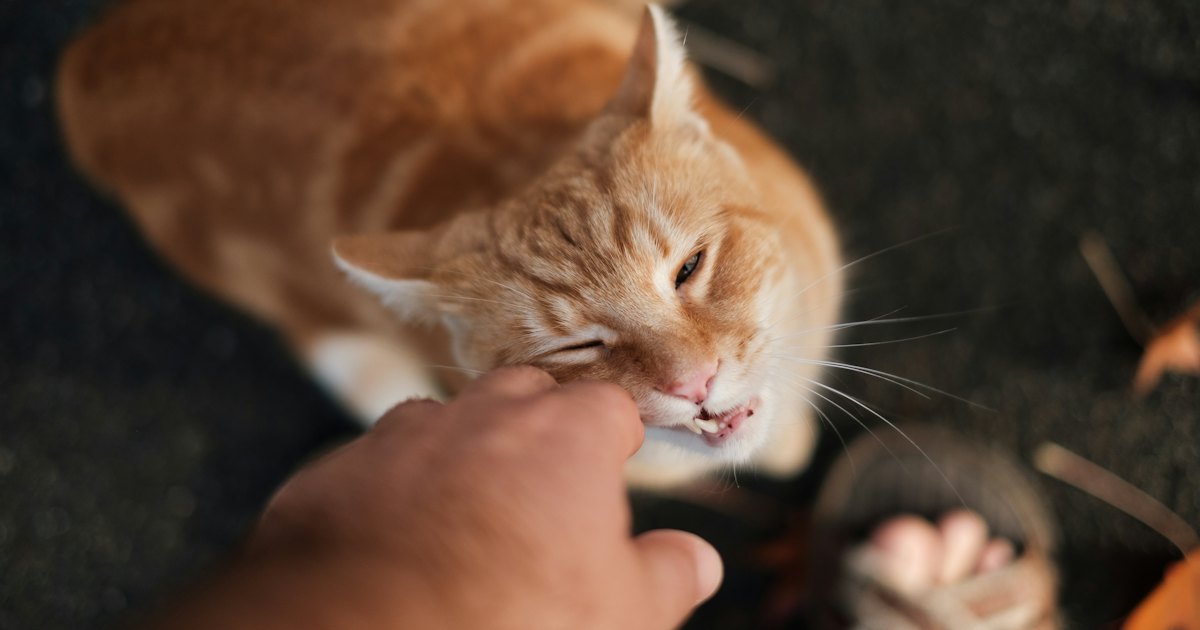
Your cat licks you, then bites because the licking tipped into overstimulation — the bite is a stop signal, not spite. Owners often call it a love bite. It shows up most during long petting on sensitive spots, like the belly or the base of the tail. Watch her ears, tail, and skin for a twitch before the nip lands.
On this page
In practice, the switch from lick to bite usually happens mid-session, not right at the start. The tell isn't the bite itself — it's what her body does right before it. A tail that starts flicking, ears that rotate back, or skin that ripples along the spine are the real signals. They show up before the teeth do. If your cat also headbutts you between bites, that's a separate, affectionate behavior. See our guide on why cats headbutt you for that one.
Cat Translator
What if you answered
in her own language?
Cat Translator gives you a playful answer in seconds — on the iPhone you already have.

PetTalk — Pet Translator
4.51,246+ ratingsFree


The 30-Second Lick-and-Bite Test
Run these checks the next time a cuddle session turns into a nip. That way you read the signal instead of just reacting to the bite.
- Check the lick pattern. A single lick followed by a soft nibble usually means the petting went on too long, not that she's upset with you.
- Check the ears. Ears that flatten or swivel back right before the bite point to overstimulation rather than aggression.
- Check the tail. A tail that starts thumping or flicking fast is a clearer warning than the bite itself.
- Check the pressure. A bite that doesn't break skin and lets go fast is a love bite. One that holds on or breaks skin needs a different read — see Fix 5 below.
A low growl or hiss next to the bite usually means she needs space right now, not later. Our free cat sound decoder walks you through what a growl, hiss, purr, or yowl next to a bite usually means. No recording or upload needed.
Fix 1: Watch For The Warning Signs Before The Bite Lands
Most lick-then-bite moments give you a short window before the teeth show up. Watch the tail first, then the ears, then the skin along her back.
A tail that goes from a slow sway to a fast flick is the clearest early sign. Ears that rotate to the side or flatten back follow right after. Catching either one and pausing usually stops the bite before it starts.
Fix 2: Shorten The Petting Session At The First Warning Sign
The simplest fix is to stop petting before she has to tell you twice. Pet for a short stretch, pause, and let her decide whether she wants more.
If she leans back in or head-butts your hand, keep going. If she goes still, flicks her tail, or turns her head toward your hand, stop there and let her walk away. Ending the session on your terms, before the bite, breaks the pattern over time.
Cat Translator
Still reading about the signs?
Open Cat Translator and try a recording next time your cat talks. Free on iPhone, iOS 16 or newer.
PetTalk — Pet Translator
4.51,246+ ratingsFree
Fix 3: Redirect The Bite Urge Toward A Toy
Some of the lick-then-bite pattern is leftover hunting instinct, not overstimulation. Keep a wand toy or a soft plush within reach during cuddle time.
The moment you see the warning signs from Fix 1, swap your hand for the toy. She gets to finish the bite instinct on something that isn't skin. The session ends on a calmer note instead of a nip.
Fix 4: Decode What The Growl Or Hiss Next To The Bite Means
A low growl or hiss next to a bite usually means your cat needs space. That's a different signal from a quiet love bite. PetTalk — Pet Translator runs its sound analysis on your phone, not in the cloud, and gives you a reading within seconds.
Open the app, hold your phone near her the next time she growls, hisses, or chirps around a bite, and tap record. Add her breed and age to her profile first — the app adjusts its reading for that. Then save the result to Sound History, so you can compare today's warning sound to next week's instead of guessing from memory.
Fix 5: Know When It's Pain, Not Overstimulation
A bite can be a pain signal, not overstimulation. That's true when it comes with flinching, hiding, or sudden aggression at a touch she normally tolerates. Watch for a bite that's harder than usual or lands on a spot she's never minded before.
PetTalk — Pet Translator and the guides on this site are built for entertainment and curiosity, not diagnosis. If the pattern changes suddenly or repeats around one specific spot, that's worth a vet visit. A licensed veterinarian can rule out a physical cause faster than any app or article.
| Bite type | What you'll see | Likely trigger | What helps |
|---|---|---|---|
| Love bite (overstimulation) | A soft lick, then a quick nip that releases right away | Long petting on the belly, tail base, or paws | Stop petting and let her walk away — see Fix 2 |
| Play bite | A pounce or grab with a light bite, often near a toy | Leftover hunting instinct, common in kittens and young cats | Redirect to a toy — see Fix 3 |
| Pain bite | A sudden, hard bite with flinching, hiding, or a yelp-like sound | A sore spot, old injury, or illness | Stop touching that area and book a vet visit — see Fix 5 |
Once the biting makes sense, some owners find the next question is what to call a cat with this much personality. Our human cat names guide has options if you're still deciding.
Cat Translator
Still reading about the signs?
Open Cat Translator and try a recording next time your cat talks. Free on iPhone, iOS 16 or newer.
PetTalk — Pet Translator
4.51,246+ ratingsFree
Frequently Asked Questions
Why does my cat bite me when I pet her?
Your cat bites you when you pet her because the touch went past her comfort limit. The bite is how she tells you to stop. Most cats give a warning first — a tail flick, flattened ears, or a sudden stillness — before the teeth show up. Shortening each petting session and watching for those signs usually prevents the bite.
Why does my cat bite me out of nowhere?
A bite that feels random usually follows a buildup you missed. That buildup might be a tail that was already flicking or ears that had turned back. Cats give these cues quietly, and a few seconds of stillness right before the bite is common. Watching her body instead of the clock is usually the easier way to catch the warning early.
Why does my cat lick me then bite me gently?
A gentle bite after licking is usually overstimulation, not a correction for something you did. The licking is affectionate grooming, and the bite is the point where repeated touch tips into too much. It's most common on sensitive areas like the belly, paws, or the base of the tail.
Is a lick-then-bite always a love bite?
No — most lick-then-bite moments are overstimulation, but not all of them. A bite that's hard, holds on, or breaks skin points to pain or stress instead. The same is true for one that comes with hissing, hiding, or flinching at a touch. If that pattern repeats, a vet visit rules out a physical cause.
Why does my cat bite my hand but not break skin?
A bite that doesn't break skin means your cat is pulling back on purpose. That shows she's controlling the bite rather than attacking. This light pressure is typical of a love bite or a play bite. It usually means she wants the petting or the game to pause, not end.
Should I pull my hand away when my cat bites?
No — pulling away fast can trigger a tighter grip or a chase instinct, especially during play. The steadier move is to go still and let her release on her own, then stand up or offer a toy instead. Reacting loudly or swatting back tends to escalate play biting instead of calming it.