Why Do Cats Chirp at Birds? What That Sound Means
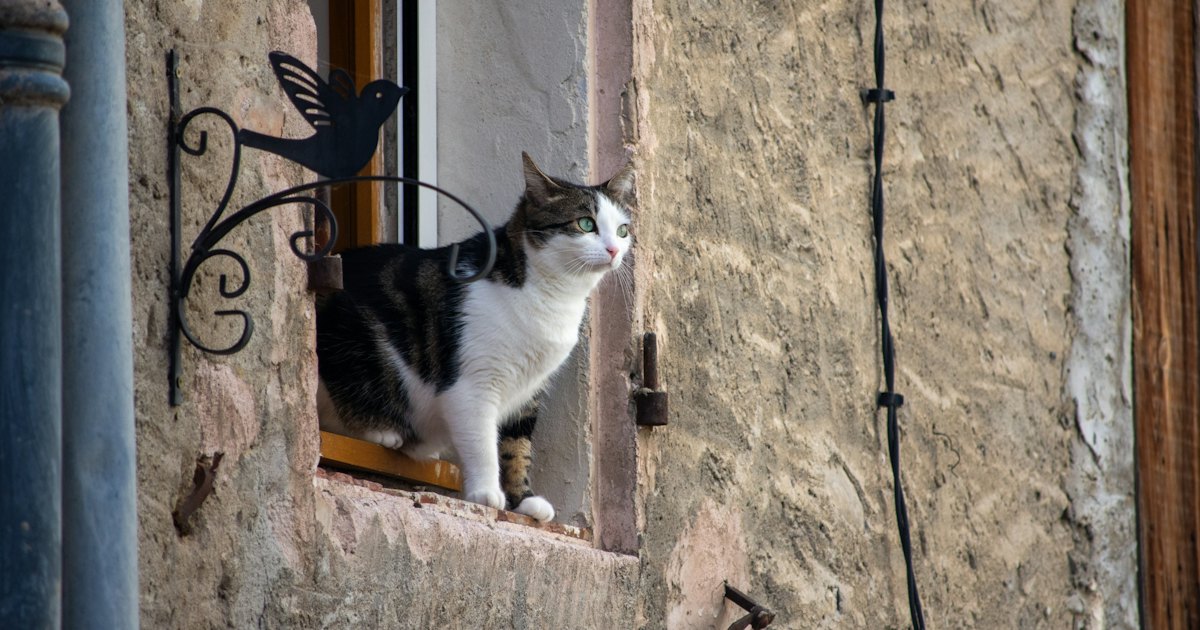
Cats chirp at birds because the sound follows an old hunting pattern, not a greeting. The short, broken chirrup shows up when a cat watches prey it can't reach — through a window, behind a screen door, or from a balcony. People often call it chattering, and it usually means a cat's hunting instinct has switched on, even with nothing to catch.
On this page
In practice, the chirp often comes with a fixed stare and a twitching tail tip. Many owners first notice it at a window ledge, right when a bird lands on a feeder or a branch outside. The sound itself is quiet and clipped — nothing like a yowl or a drawn-out meow.
Cat Translator
What if you answered
in her own language?
Cat Translator gives you a playful answer in seconds — on the iPhone you already have.

PetTalk — Pet Translator
4.51,246+ ratingsFree


The 30-Second Chirp Test
Before you dig into the methods below, run this quick check. It separates an excited, bird-watching chirp from a sound that needs more attention.
- Is your cat staring at something outside — a bird, squirrel, or insect?
- Is the tail tip twitching or flicking while the jaw chatters?
- Does the sound stop soon after the bird flies off or you call their name?
If you answered yes to most of these, the chirp is almost certainly prey drive. If the sound keeps going long after the trigger is gone, skip ahead to Fix 1 below.
Method 1: Listen for the Chirp-Chatter Pattern
A chirp is a short, bright syllable — almost like a bird's own call, which is part of why it's easy to mix up. Chattering is the same sound repeated fast, often with a visible jaw tremor. Both are different from a trill, which rises and falls like a rolled r and usually greets you instead of prey.
Record a few seconds on your phone if you can, then replay it slowly. A true hunting chirp is brief and clipped, not a sustained note, and it tends to repeat in short bursts for as long as the bird or squirrel stays in view.
Method 2: Watch What Triggered It
Context tells you more than the sound alone. Chirping at a bird through a window often comes with a crouched or seated position, wide pupils, and that fixed stare. The cat's body stays low and still, as if it's getting ready to pounce on something it can never reach.
Compare that to chirping when you walk in the door. That version usually sounds softer, paired with a raised tail and relaxed posture — closer to a greeting trill than a hunting chirp. The trigger, not just the sound, tells you which one you're hearing.
| Sound | What It Sounds Like | Common Trigger | Likely Meaning |
|---|---|---|---|
| Chirp / chatter | Short, broken syllable with a jaw tremor | Bird or insect seen through glass | Prey drive — excitement, not aggression |
| Trill | Rolled, rising-and-falling note | You walking into the room | Greeting, or inviting you to follow |
| Short meow | Single, brief call | You coming home or making eye contact | Hello or simple acknowledgment |
| Long, repeated meow | Drawn-out or rapid-fire calls | Mealtime or an empty bowl | Demand, or growing urgency |
| Purring, relaxed body | Steady, low rumble | Being petted or resting near you | Contentment |
| Purring, tense body | Same rumble, stiff posture | Vet visits or the carrier | Self-soothing under stress |
Cat Translator
Still reading about the signs?
Open Cat Translator and try a recording next time your cat talks. Free on iPhone, iOS 16 or newer.
PetTalk — Pet Translator
4.51,246+ ratingsFree
Method 3: Try Decoding It With an App
If you want a read on one specific sound rather than general patterns, Cat Translator can help. The app — listed on the App Store as PetTalk — Pet Translator — records a few seconds of audio, analyzes pitch, duration, and intensity on your device, and hands back a short, plain-English read within seconds. Nothing gets uploaded, so it works offline too.
It covers the same everyday moments you're probably already puzzling over, including why your cat headbutts you one minute and licks you, then bites the next. Chirping at the window just happens to be one of the clearer ones, since the trigger is sitting right there on the other side of the glass. Treat the read-out as a fun translation, not a diagnosis — it's built for curiosity, not a vet visit.
Fix 1: What If the Chirping Won't Stop or Sounds Stressed
Most chirping is harmless excitement, but a few signs are worth watching. If the chirp turns into continuous, frantic chattering paired with flattened ears, a crouched body, or lunging at the glass, your cat may be frustrated rather than simply alert — some cats get worked up when they can't reach prey they clearly want.
Chirping that shows up alongside hiding, lost appetite, or sudden aggression toward other pets is a different story. That combination is a reason to call your veterinarian rather than wait it out. Sound-based apps, including Cat Translator, are built for curiosity, not diagnosis — don't let a cheerful read-out talk you out of a vet visit when something feels off.
Cat Translator
Still reading about the signs?
Open Cat Translator and try a recording next time your cat talks. Free on iPhone, iOS 16 or newer.
PetTalk — Pet Translator
4.51,246+ ratingsFree
Frequently Asked Questions
Why do cats chirp?
Cats chirp mainly to signal excitement around prey they can see but can't reach, like a bird on a windowsill. The sound pairs a short vocal chirp with a rapid jaw tremor, often called chattering. Some cats also chirp as a soft greeting, though that version usually sounds calmer and skips the jaw tremor.
Why do cats chirp at birds?
Cats chirp at birds because birds trigger a hunting response the cat can't finish. Watching prey through glass or a screen builds the same excitement as a real stalk, but with no outlet for the pounce. The chirp-chatter combination is leftover energy from that blocked hunt.
Why is my cat chirping?
Your cat is most likely chirping at something it's watching — a bird, bug, or moving leaf outside a window. Check where its eyes are pointed before assuming anything's wrong. If it's staring at a fixed point and chattering its jaw, that's a normal hunting response, not distress.
What does cat chirping mean?
Cat chirping usually means your cat has spotted something it wants to chase and can't. It's a sign of focused excitement, not fear or pain. The chatter layered under the chirp — a fast jaw tremor — is the clearest tell that prey drive, not greeting, is behind the sound.
Why do cats chirp at me?
A chirp aimed at you is usually a greeting, closer to a trill than a hunting chirp. Cats often use it to say hello, ask you to follow them, or point you toward food or a toy. It tends to sound softer and shorter than the chatter-heavy chirp aimed at birds.