What Do Cat in Heat Sounds Mean?
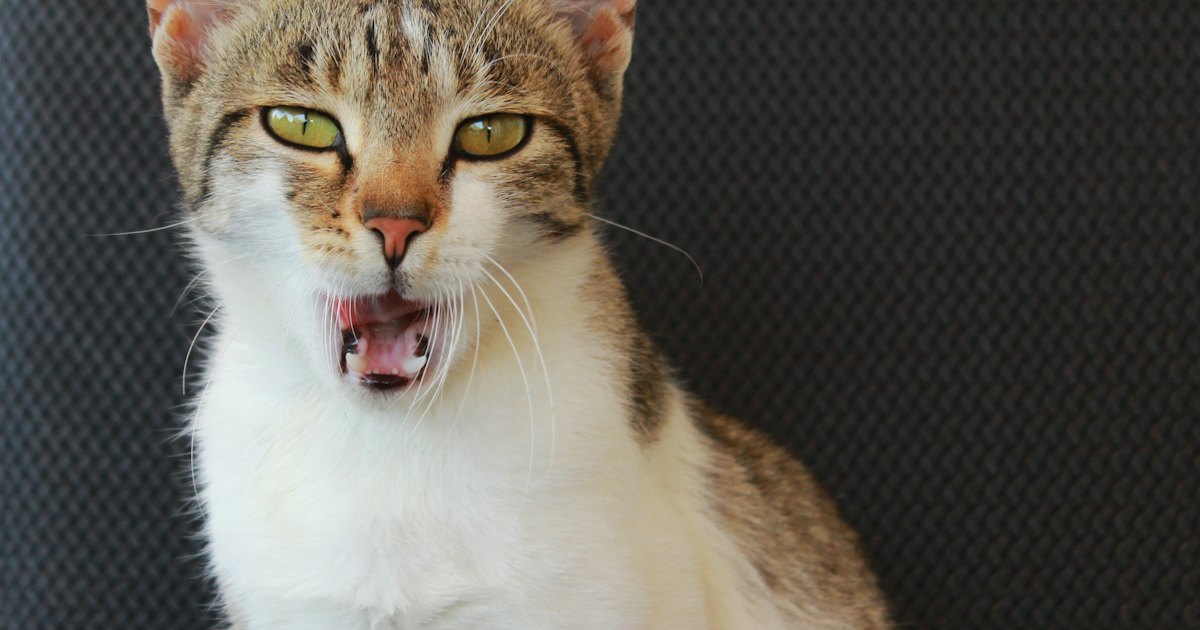
Cat in heat sounds are long, low, drawn-out yowls and moans — louder and more insistent than a normal meow. An unspayed female cat makes them to signal she's ready to mate, usually paired with rolling, rubbing against furniture, and raised hindquarters. The calling can run on and off for days.
On this page
Most owners notice the sound before they notice anything else, since it's unlike the cat's usual voice. It tends to show up in cycles rather than once, which is itself a clue: a cat in heat settles down between bouts, then starts again.
Cat Translator
What if you answered
in her own language?
Cat Translator gives you a playful answer in seconds — on the iPhone you already have.

PetTalk — Pet Translator
4.51,246+ ratingsFree


The 30-Second Test
Three quick checks before you read the full breakdown below.
- Is your cat an unspayed female, roughly past kitten age? Heat calling doesn't happen in spayed cats or in kittens too young to cycle.
- Does the yowling come with rolling, rubbing, and a raised rear end — not limping, hiding, or straining?
- Has it happened before, in a pattern of a few noisy days followed by quiet ones?
Three yeses point to heat. Any no — especially limping, hiding, or straining — points to Method 3 below instead.
Method 1: Listen for the Yowl Itself
Heat calling sounds different from a request meow. It's longer, lower in pitch at the start, and often rises into something closer to a moan or a cry. Some owners describe it as sounding like actual distress, even though the cat isn't hurt.
- Long and drawn-out, often several seconds per call.
- Repeated in bursts — a string of calls, then quiet, then another string.
- Louder at night, when the house is quiet and the cat is more active.
- Paired with restlessness: pacing, trying to get outside, or lingering by doors and windows.
A single short meow almost never means heat on its own. It's the length, the pitch, and the repetition together that point to a cycle rather than a normal request.
Method 2: Watch What Her Body Does at the Same Time
The sound rarely shows up alone. Heat brings a specific set of behaviors, and seeing two or three together is a stronger signal than the yowling by itself.
- Rolling on the floor, sometimes repeatedly in the same spot.
- Rubbing her head and body against furniture, doorframes, or your legs more than usual.
- Raising her hindquarters and treading with her back feet when touched near the base of the tail.
- A noticeable drop in appetite during the loudest days.
- Trying harder than usual to get outside, even for a normally indoor cat.
For a wider look at what a cat's posture and movement usually signal, our guide to cat behavior explained covers the everyday signals outside of a heat cycle.
Cat Translator
Still reading about the signs?
Open Cat Translator and try a recording next time your cat talks. Free on iPhone, iOS 16 or newer.
PetTalk — Pet Translator
4.51,246+ ratingsFree
Method 3: Rule Out Pain, Injury, or Illness
Yowling isn't exclusive to heat. Pain, a urinary blockage, or plain distress can all sound similar to an untrained ear, and the difference matters because the follow-up is completely different.
- Straining in the litter box, or very little urine coming out, needs a vet the same day — this can be a blockage, not a heat cycle.
- Limping, flinching when touched, or hiding instead of seeking attention points away from heat.
- A cat that's lethargic between calls, rather than restless and active, is more likely unwell than cycling.
- A male cat yowling the same way is never a heat call — it's worth a vet visit to rule out pain or a urinary issue.
Heat calling comes with energy and restlessness, not withdrawal. A cat that stops eating entirely, hides, or seems weak between bouts of noise should see a vet rather than wait out what looks like a cycle.
Method 4: Tell a Heat Call Apart from Other Loud Meows
Cats make plenty of loud, unusual sounds that have nothing to do with heat. Chirping at birds through a window is one common example — it's a prey-drive reaction, not a reproductive one, and it sounds sharp and clipped rather than long and moaning. We cover that sound separately in why do cats chirp at birds.
When a sound genuinely doesn't fit any pattern you recognize, running it past something built to decode cat vocalizations can help narrow it down. PetTalk - Pet Translator records the sound and returns a plain-English read within seconds, on the phone, with nothing uploaded off the device. It's a playful tool for narrowing down what you're hearing, not a replacement for a vet when something looks like pain rather than a cycle.
Fix 1: What Actually Stops the Calling
There are two real options, and only one of them ends the behavior for good.
- Spaying removes the heat cycle entirely, so the calling stops permanently once your cat has recovered from the procedure.
- Waiting it out means the noise returns every cycle until she's spayed or becomes pregnant — neither is a long-term fix.
- Keeping her strictly indoors during a cycle lowers the risk of an unplanned litter while you wait for a spay appointment, but it doesn't quiet the yowling itself.
If you're not planning to breed your cat, talk to your vet about timing a spay. It's the only option that removes the sound rather than just managing it.
| Sound | How it sounds | What usually comes with it | What it usually means |
|---|---|---|---|
| Heat yowl | Long, low, drawn-out, repeated in bursts | Rolling, rubbing, raised hindquarters | Unspayed female signaling she's ready to mate |
| Pain cry | Sharp, sudden, or a constant low moan | Hiding, limping, straining, lethargy | Injury, illness, or a urinary blockage — see a vet |
| Bird chirp | Short, clipped, chattering | Fixed stare at a window, tail twitching | Prey-drive reaction, unrelated to heat |
| Hungry meow | Short, rising in pitch, repeated near feeding time | Pacing near the food bowl, following you | A request for food, not a reproductive signal |
Cat Translator
Still reading about the signs?
Open Cat Translator and try a recording next time your cat talks. Free on iPhone, iOS 16 or newer.
PetTalk — Pet Translator
4.51,246+ ratingsFree
Frequently Asked Questions
How long does a cat stay in heat and make noise?
A single heat cycle typically runs about a week, with the loudest calling in the first few days. If she isn't bred or spayed, the cycle repeats every few weeks through the breeding season. The noise usually fades between cycles, not during them.
Is the yowling a sign that my cat is in pain?
Not on its own. Heat calling comes with restlessness and energy, not withdrawal. A cat that's also hiding, limping, straining in the litter box, or not eating at all needs a vet — that combination points to pain or illness rather than a normal cycle.
Do all female cats make these sounds, and can males sound similar?
Most unspayed female cats vocalize during heat, though some are louder than others. Male cats don't go into heat and shouldn't make this same drawn-out call — a male yowling repeatedly is more likely in pain or dealing with a urinary issue, and is worth a vet visit.
Why does my cat only yowl like this at night?
Heat calling often sounds louder at night simply because the house is quieter, so a sound your cat makes all day becomes more noticeable once everything else goes silent. The behavior itself doesn't follow a strict day-night schedule.
Does spaying stop the yowling completely?
Yes. Spaying removes the organs that drive the heat cycle, so once your cat has recovered from the procedure, the cycle — and the calling that comes with it — stops permanently. It won't affect sounds unrelated to heat, like hunger or pain.
Is a cat in heat's yowl just a long, loud meow?
It's related, but a heat call is longer and lower than a typical meow, and it repeats in bursts rather than once. A single long meow by itself usually just means an urgent request, like food or attention, not a heat cycle.