Do Dogs Understand Cat Body Language?
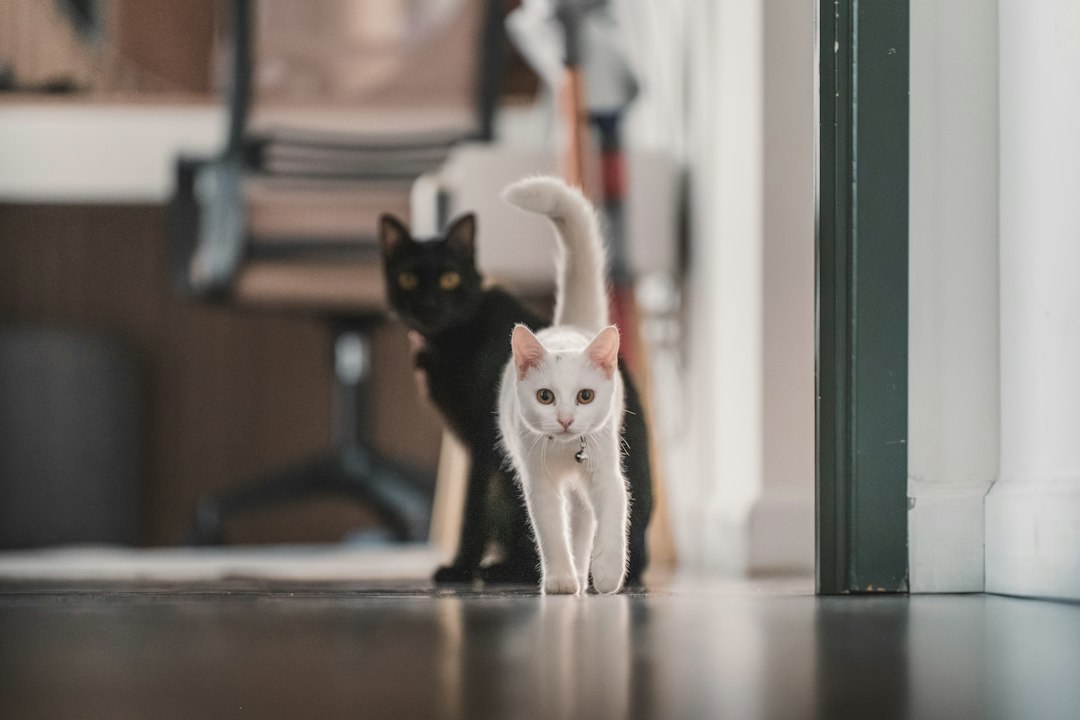
Dogs don't naturally understand cat body language. The two species use many opposite signals, so a wagging tail or a hard stare reads as friendly to a dog but threatening to a cat. Dogs can learn some feline cues through calm, repeated exposure, but most mixed-signal scuffles start with this basic misread.
On this page
This mismatch trips up a lot of multi-pet homes. Your dog bounds over, tail high and wagging, expecting a new friend. Your cat reads that same posture as a charge and swats or bolts. Both animals think they are being clear — they just speak different languages.
The 30-second test before you let them mingle
Before you trust a dog to read a cat, run a fast check on the moment in front of you. It takes about 30 seconds and catches the worst misreads early.
- Tail: is the cat's tail low, tucked, or thrashing? A dog often misreads that as a friendly wag.
- Ears: are the cat's ears flat or swiveled back? That is a stop sign your dog may walk straight past.
- Space: can the cat leave the room? A cat with no exit escalates fast, whatever your dog intends.
If the cat looks tight and the dog looks bouncy, split them up and try again later. The tail is the single signal dogs get most wrong, so start with our guide to what a cat purring and wagging its tail means. A calm cat and a slow dog can share a room; a cornered cat cannot.
Method 1: Learn the signals that mean opposite things
Start here, because this is the root of nearly every dog-cat misunderstanding. Four core signals carry the reverse meaning across the two species.
- Tail wag: a loose wag means happy in a dog; in a cat, a swishing tail means agitation.
- Direct stare: dogs greet and play with eye contact; a cat reads a hard stare as a threat.
- Rolling over: a dog showing its belly wants a rub; a cat on its back has all four sets of claws ready.
- Approach speed: a bouncy, head-on run says "play" to a dog and "attack" to a cat.
Once you see these four flips, most standoffs make sense. Your dog is not being rude; it is reading cat with a dog dictionary. To learn the friendly side your dog keeps misreading, see happy cat body language, and the full map of feline signals sits in cat behavior explained. When it won't apply: a dog raised beside cats from 8 weeks old often softens these on its own.
Method 2: Catch the cat warnings your dog will miss
Cats warn in small, quiet steps long before they swat. Dogs, tuned to bigger body signals, tend to blow past the early ones.
- A slow tail flick that speeds into a hard thrash — the cat is done, not playing.
- Ears rotating sideways or flattening — the last calm second before a hiss.
- A frozen, low crouch with a locked stare — the cat is loaded, not relaxed.
Your dog may only clock the hiss or the swat, which is the cat's fourth or fifth warning, not its first. The ASPCA's notes on cat aggression describe the flat ears and lashing tail that come first. Once the hissing starts, our guide to why cats hiss breaks down what it means. When it won't apply: some confident cats skip the slow build and correct a dog with one fast, harmless tap.
Method 3: Read your dog's answer to the cat
Reading runs both ways. Watch how your dog responds to a cat's signals, because that shows whether it is learning or ignoring.
- Good sign: your dog softens, looks away, or backs up when the cat tenses.
- Warning sign: your dog fixates, stiffens, or creeps closer as the cat shrinks back.
- Play vs. prey: a loose, wiggly dog invites play; a still, locked-on stalk is prey drive, and that needs distance.
A dog that yields to a cat's request for space is reading it correctly, even without grasping the feline logic. A dog that hardens is climbing the ladder, and that is your cue to step in. When it won't apply: high-drive breeds may lock on from instinct, not malice, and still need managed introductions.
Method 4: Help the two learn each other's language
Dogs can pick up some cat signals with time, scent, and calm staged meetings. You can't rewire instinct, but you can teach a working truce.
- Swap scents first: rub a cloth on each pet and let the other sniff it for 3 to 4 days before they meet.
- Meet through a cracked door or a baby gate in short 5-minute sessions, so nobody feels trapped.
- Give the cat high perches and an easy exit in every shared room — vertical space defuses most standoffs.
- Reward your dog for calm, look-away behavior near the cat, not for staring or chasing.
Move at the cat's pace, not the dog's. Weeks, not days, is the normal timeline for a real truce. The Cornell Feline Health Center is a solid place to read up on feline stress if the cat stays on edge. When it won't apply: a dog with a strong, rehearsed chase habit needs a trainer, not just a gate.
Cat Translator
Curious what that meow means?
Cat Translator gives you a playful answer in seconds — on the iPhone you already have.

PetTalk — Pet Translator
4.51,245 ratingson the App Store
 Point your camera to install
Same signal, opposite meaning: dog vs cat
One picture makes the whole problem click. This table pairs a shared signal with what each animal thinks it means. For the deeper read on your cat's side of it, see cat meowing sounds meaning and what your cat's sitting body language is telling you.
| Signal | What it means to a dog | What it means to a cat |
|---|---|---|
| Wagging or swishing tail | Happy, excited | Agitated, a warning |
| Direct eye contact | Friendly, playful | Threat, a challenge |
| Rolling onto the back | Wants a belly rub | Defensive, claws ready |
| Fast, head-on approach | Let's play | Incoming attack |
| Turning away or slow blink | Mild interest | Calm, no threat |
Behavior reads mood, not a diagnosis. A dog and cat who suddenly can't settle after weeks of calm is a question for a trainer or vet, not a home fix.
Cat Translator
Still reading about the signs?
Open Cat Translator and try a recording next time your cat talks. Free on iPhone, iOS 16 or newer.
PetTalk — Pet Translator
PetTalk — Pet Translator · Free · iOS 16+
Point your camera to installA fun way to listen in: Cat Translator
You don't need an app to referee a dog and a cat — the reads above do the real work. Once the two are calm together, though, Cat Translator — our iPhone app, listed on the App Store as PetTalk — Pet Translator — is a playful way to join in. It handles both cats and dogs, and it is built for entertainment, not diagnosis, so keep the signals above for anything that matters.
The listing describes a simple loop:
- Make a pet profile with your pet's breed and age — cat or dog.
- Hold your iPhone near your pet and tap record; the listing says analysis runs on the device, with no audio uploaded.
- Read the light, human-style line it returns within seconds; it saves to your Sound History.
Two listed features fit a two-pet home. Sound History lets you track which pet gets vocal around the other, and Export and Share sends a clip to your vet or trainer if a sound worries you. The listing shows the app runs on iPhone with iOS 16 or newer, is free to download, and covers both cats and dogs. Read the app's story on our about page or start at the Cat Translator home page.
Frequently Asked Questions
Do dogs understand cat body language?
Not by instinct. Dogs and cats evolved with many opposite signals, so a dog's default reading of a cat is often wrong. A wagging tail or a direct stare feels friendly to a dog but reads as a threat to a cat. Dogs can learn some feline cues with calm, repeated exposure, but the first meetings usually rely on you to translate.
Why does my dog think my cat wants to play when it doesn't?
Your dog is reading feline signals as canine ones. A cat's swishing tail and flattened ears mean back off, but a dog sees movement and energy and reads an invite. The bouncy, head-on approach that says "play" in dog language reads as a charge to a cat, which is why the cat swats or runs.
Can dogs and cats learn to read each other over time?
Yes, many do with patient, staged introductions. Dogs raised beside cats from puppyhood often learn to soften a stare or slow an approach. Scent swapping, gated meetings, and rewarding calm behavior speed it up. Expect weeks, not days, and never force contact — a cat with a safe exit and high perches learns to trust the dog faster.
What cat signals do dogs miss most often?
Dogs miss the cat's early, quiet warnings. A slow tail flick, ears rotating sideways, and a frozen crouch all come before the hiss, but dogs are tuned to bigger movement and skip them. By the time a dog notices the swat, the cat has already given three or four signals it hoped the dog would read.
Is a wagging tail the same in dogs and cats?
No, and this is the classic mix-up. A dog's loose wag usually means it is happy or excited. A cat's tail swish means the opposite — agitation, focus, or a warning to give space. A relaxed cat holds its tail fairly still or gives a slow, gentle sway, not a broad, fast wag.
How do I introduce a dog and cat safely?
Go slow and keep the cat in control. Swap each pet's scent on a cloth for a few days first. Then meet through a baby gate in short 5-minute sessions, with the dog on a leash and the cat free to leave. Give the cat high perches, reward the dog for calm, and build up over weeks rather than one big meeting.