What Is Cat Enrichment, and How Do You Start?
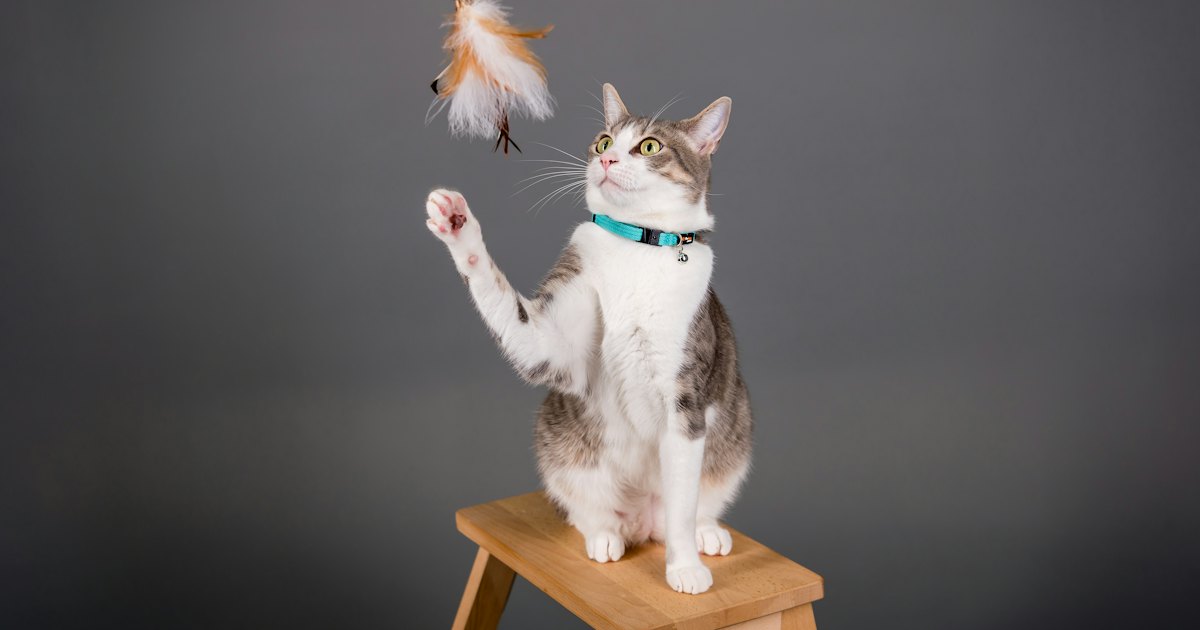
Cat enrichment means giving an indoor cat the hunting, climbing, scratching, and problem-solving that a cat living outdoors gets for free, through a handful of repeatable habits: food puzzles that slow down meals, vertical space for climbing and watching, a scratcher placed where your cat already scratches, and short daily play sessions that swap out for novelty. Start with one change, watch how your cat reacts, then add another.
On this page
On practice, cats that get short bursts of varied activity stay interested longer than cats left with one toy on the floor all day. A 10-minute hunting-style play session before dinner tends to settle a restless cat faster than a new toy ever does. The goal isn't more stuff — it's more variety.
Cat Translator
What if you answered
in her own language?
Cat Translator gives you a playful answer in seconds — on the iPhone you already have.

PetTalk — Pet Translator
4.51,246+ ratingsFree


The 30-Second Enrichment Check
Run through this list before buying anything new. It takes less time than opening a shopping app.
- Hunting: does your cat get to chase, stalk, or pounce on something every day?
- Climbing: is there a shelf, perch, or cat tree higher than your couch?
- Scratching: is a scratcher placed where your cat already scratches, not across the room?
- Resting: does your cat have at least one high, quiet spot away from foot traffic?
- Novelty: have the toys on the floor changed in the last 2 weeks?
Three or more yes answers means you're already covering the basics. One or two means pick a single method below and start there.
Method 1: Feed Like a Hunter, Not a Vending Machine
A bowl that refills itself turns eating into a 30-second event. A hunter's version of the same meal takes far longer and uses muscles a bowl never will.
- Split the daily food into 3 or 4 small portions instead of one bowl.
- Hide one portion in a treat ball, or a muffin tin with paper cups set over each cup.
- Scatter the last portion across a towel or low-pile rug so your cat has to sniff it out.
- Swap the puzzle shape every few days so the challenge doesn't go stale.
This doesn't work well for cats who guard food or get nervous around new objects. For them, start with a shallow, open puzzle before moving to anything enclosed.
Method 2: Give Vertical Space to Climb and Watch
Cats default to watching a room from above when they can. A window perch at least 3 feet off the floor, a wall shelf, or a cat tree all do the same job: height plus a view.
- Face at least one perch toward a window with outside activity — traffic, birds, or a yard.
- Space wall shelves 12 to 18 inches apart so a cat can climb in stages instead of one big jump.
- Check the weight rating on any wall-mounted shelf before trusting it with a full-grown cat.
Senior cats and cats with arthritis often skip tall furniture, not because they dislike height but because the jump hurts. A ramp or a few low steps up to the same perch usually brings them back to it.
Method 3: Put Scratching Where Your Cat Already Wants It
Scratching marks territory and keeps claws in shape. It isn't a behavior to train away — it's one to redirect toward a spot you can live with.
- Place the new scratcher right next to the furniture your cat already scratches, not across the room.
- Offer both a horizontal cardboard pad and a vertical sisal post — cats split fairly evenly on which they prefer.
- Give the new scratcher about 1 to 2 weeks of steady use before judging whether it worked.
- Move it only a few inches at a time if you need to relocate it later, once your cat has adopted it.
A throw blanket or double-sided tape over the old target can slow a cat down while the new scratcher earns its place. Treat it as a temporary bridge, not a punishment.
Cat Translator
Still reading about the signs?
Open Cat Translator and try a recording next time your cat talks. Free on iPhone, iOS 16 or newer.
PetTalk — Pet Translator
4.51,246+ ratingsFree
Method 4: Rotate Toys Instead of Buying More
Novelty matters more than toy count. Three toys rotated weekly usually hold a cat's attention better than ten toys left out every day.
- Keep only 2 or 3 toys out at a time; box the rest.
- Swap the active set every 5 to 7 days instead of adding new toys to the pile.
- Save one high-value toy, like a wand with feathers, for short supervised sessions only.
The PetTalk - Pet Translator app pairs well with this kind of rotation. Its Interactive Games are built around natural feline instincts — hunting, curiosity, and comfort-seeking — so a short game session on your phone can fill the gap between toy swaps. You can find it on the App Store listing for PetTalk - Pet Translator, offered free with an iOS 16 or newer requirement.
A phone screen doesn't replace a physical toy, and it shouldn't try to. Use it as one more short, varied activity in the rotation, not the whole plan.
Method 5: Build a Calm Space for Loud or Stressful Days
Fireworks, thunderstorms, and moving boxes all spike a cat's stress the same way: sudden noise or disrupted territory. A safe space — a covered carrier, a closet shelf, or a room with the blinds down — gives a stressed cat somewhere to go instead of bolting.
Cats that already spend regular time in a calm, enclosed spot during normal play tend to use it faster under stress, instead of wedging themselves somewhere less safe.
If your cat is vocalizing more than usual on a stressful day, our Cat Sound Decoder can help you get a quick read on what that particular sound usually means.
If you're planning time away and wondering how your setup holds up without you there, our guide on how long you can leave a cat alone covers the food, water, and litter checklist for stretches longer than a workday.
Enrichment Methods at a Glance
| Method | What it targets | Typical starting cost |
|---|---|---|
| Food puzzle | Hunting drive, slower eating | Free with items you already own |
| Vertical space | Climbing, watching, territory | Varies — a shelf costs less than a floor-to-ceiling tree |
| Scratching post | Claw health, marking | Low — a cardboard scratcher costs less than a sisal post |
| Toy rotation | Novelty, play drive | Low if you're reusing toys you already have |
| Calm space | Stress recovery | Free — a closet shelf or covered carrier works |
Cat Translator
Still reading about the signs?
Open Cat Translator and try a recording next time your cat talks. Free on iPhone, iOS 16 or newer.
PetTalk — Pet Translator
4.51,246+ ratingsFree
Frequently Asked Questions
What counts as cat enrichment?
Cat enrichment is anything that lets a cat use natural behaviors — hunting, climbing, scratching, exploring — indoors. It covers food puzzles, climbing furniture, scratching posts, play sessions, and safe resting spots. The common thread is activity your cat would otherwise go without inside a home.
How often should I rotate my cat's toys?
Try rotating toys every 1 to 2 weeks — swap the active set out, don't just add more. A smaller rotating set usually keeps a cat curious longer than a toy box that never changes. Keep one high-value toy aside for supervised play only.
Why do cats scratch furniture?
Cats scratch furniture because it's already positioned where they want to mark territory and stretch, and nothing else nearby serves the same purpose. The couch arm near a doorway or window is a common target for exactly that reason. Moving a scratcher to that same spot usually works better than removing the couch access.
How do I stop my cat from scratching the couch?
Put a scratcher directly next to the couch, not across the room, and give it 1 to 2 weeks before judging it. Offer both a horizontal and a vertical option since cats differ on which they prefer. Cover the couch spot temporarily with a throw while the new scratcher earns its place.
Are cats scared of fireworks?
Yes, sudden loud noise like fireworks commonly startles cats, and some react by hiding, pacing, or trying to bolt toward an exit. A covered carrier or an enclosed, quiet room usually works better than open floor space for riding it out. Building that habit before fireworks season helps more than trying it for the first time mid-noise.
Is food puzzle feeding safe for cats?
Yes, food puzzles are safe for most healthy cats when the opening size fits their mouth and the portion matches their daily amount. If your cat has dental pain or a prescription diet, check that a puzzle still fits your vet's feeding plan. Start with an easy, open puzzle before anything fully enclosed.