Why Do Cats Move Their Kittens? Causes And How To Stop It
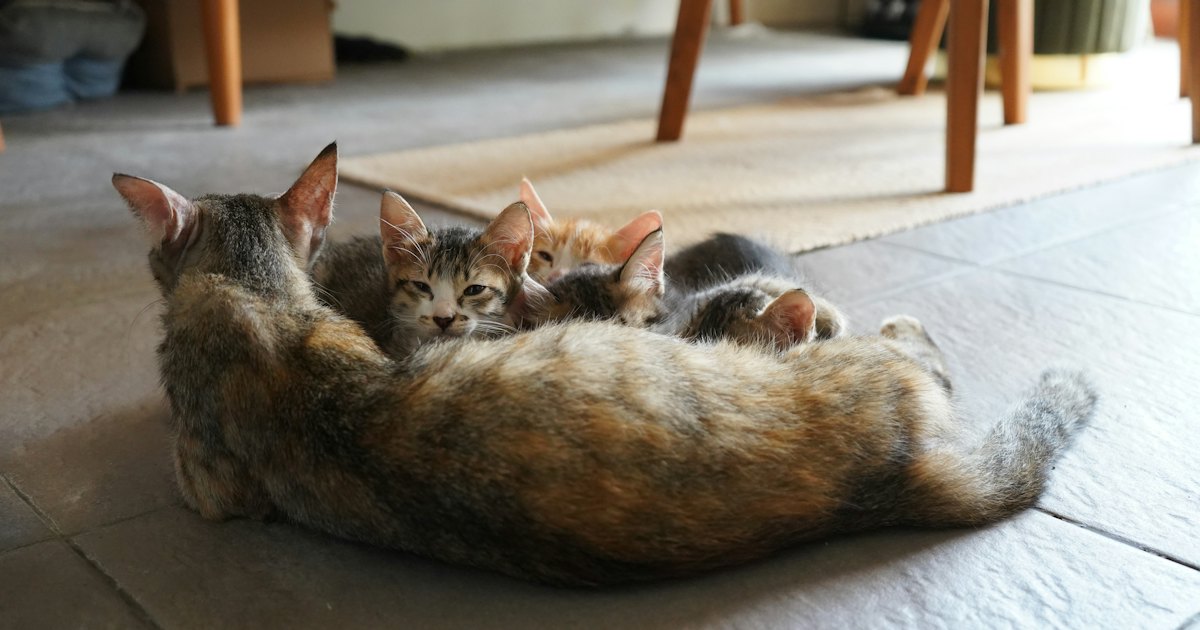
Cats move their kittens to a new nest when the current spot feels unsafe, noisy, or too disturbed by handling. It's an instinctive survival response, not a rejection of the litter. Most mother cats settle once they find a quiet, warm corner nobody keeps visiting. A single move on its own is rarely an emergency.
On this page
Waking up to an empty nesting box is alarming. Owners often search the whole house before finding a tucked-away pile of kittens under a bed or inside a closet. That panic is normal. In most cases, though, the kittens are fine — their mother simply wanted somewhere better.
Cat Translator
What if you answered
in her own language?
Cat Translator gives you a playful answer in seconds — on the iPhone you already have.

PetTalk — Pet Translator
4.51,246+ ratingsFree


The 30-Second Nest Check
Run through this before you worry. It takes seconds and rules out the two problems that actually matter.
- Count every kitten. If the whole litter moved together, she relocated them on purpose.
- Feel the new spot. A warm, dry, dim corner means she picked it deliberately, not in a panic.
- Watch her for a few minutes. A mother that keeps returning to nurse and groom isn't rejecting the litter.
- Look for one left behind. A single kitten alone in the old nest for more than an hour needs your help now.
Fix 1: Build A Nest She Won't Want To Leave
A lot of repeat moves come down to the nest itself. Give her a box that beats anything she can find on her own.
- Pick a quiet room with a steady temperature — not next to a washing machine, furnace, or busy hallway.
- Use a low-sided box so she can get in and out, but kittens can't climb out on their own.
- Line it with washable bedding and change it every couple of days so it doesn't smell like a litter box.
- Keep the lights dim and the door mostly closed. Cats nest the way they would outdoors — tucked away, not on display.
A quiet room also makes it easier to read what the litter sounds like day to day. For a broader look at feline body language and stress signals, see our guide to cat behavior.
Fix 2: Cut Back On Handling And Visitors
New kittens draw a crowd, and that's often exactly what pushes a mother cat to move them. Too much strange scent on a kitten can read as danger to her.
- Keep visits short, and only after she's eaten and settled back into the nest.
- Wash your hands before and after touching the litter, so you're not carrying in outside scent.
- Keep other pets out of the room for the first couple of weeks, even if they just seem curious.
Cat Translator
Still reading about the signs?
Open Cat Translator and try a recording next time your cat talks. Free on iPhone, iOS 16 or newer.
PetTalk — Pet Translator
4.51,246+ ratingsFree
Fix 3: Rule Out A Real Threat In The Old Spot
Sometimes a move isn't about comfort. It's about something she noticed before you did.
- New noise nearby — construction, a dog barking through a wall, or a vacuum used too close to the box.
- A draft or sudden temperature swing, especially near a window or exterior wall.
- Another pet sniffing or pawing at the box when she isn't watching.
- A pest problem, even a small one, such as fleas or mites around the bedding.
If none of these fit and she still moves the litter every day, treat that pattern as the real signal, not the move itself.
Fix 4: Know When Repeated Moving Means Something's Wrong
Moving a litter two or three times in the first few weeks is ordinary. A pattern that never settles down is different.
- She moves the kittens daily, with no spot lasting more than a day.
- One specific kitten keeps getting left behind while the rest go with her.
- She seems lethargic, feverish, or uninterested in nursing — signs the problem is with her, not the room.
Any of those is worth a same-day call to your vet rather than another night of waiting.
When To Call A Vet
Most nest changes sort themselves out within a day. Call sooner if you notice any of the following.
- A kitten isn't gaining weight or feels cold to the touch.
- The mother shows discharge, a fever, or stops eating.
- One kitten is crying constantly while the others are quiet and settled.
- The litter has been split across more than one spot for several hours.
| Sign | Normal Nest-Moving | Needs A Vet |
|---|---|---|
| Where the kittens end up | All together in one new spot | Split up, or one left alone |
| How often it happens | A few times over the first weeks | Every day, with no spot sticking |
| Mother's behavior | Nursing and grooming as usual | Avoiding the litter or seeming unwell |
| Kitten condition | Steady weight, brief crying | Not gaining weight, crying nonstop |
Once the litter settles, a lot of owners start recording the mews and chirps just to guess at the mood behind them. PetTalk — Pet Translator, free on the App Store for iPhones on iOS 16 or newer, turns a short recording into a plain-English guess on the device, in seconds, without uploading the audio anywhere. It won't tell you why she moved the nest, but it's a fun way to read the everyday sounds that follow.
If you're also sorting out names for a mixed litter, our list of cat names that start with p covers options for both the shy ones and the bold ones. For general newborn-kitten care steps beyond nest moves, the ASPCA keeps a broader cat care guide.
Cat Translator
Still reading about the signs?
Open Cat Translator and try a recording next time your cat talks. Free on iPhone, iOS 16 or newer.
PetTalk — Pet Translator
4.51,246+ ratingsFree
Frequently Asked Questions
How long can you leave a mother cat alone with her kittens?
A healthy mother cat can be left alone with kittens for a normal workday once they're a few days old, as long as food, water, and the nest box are within easy reach. Skip overnight trips during the first two weeks — newborns can't regulate their own body heat yet and depend on her for warmth.
How do I introduce another cat to a brand-new litter?
Keep a resident cat separated from a new litter for at least the first couple of weeks, then introduce them gradually through a cracked door or baby gate. Feeling crowded by another pet is one common reason a mother moves her kittens again, so slow, supervised visits matter more than speed.
How do I get a protective mother cat into a carrier?
Move the whole nest box into the carrier first, then let her climb in to follow her kittens instead of lifting her directly. Cats struggle far less when they're walking toward their litter than when they're being carried away from it.
Will a cat reject or abandon a kitten she keeps leaving behind?
Rarely, but it can happen if she senses the kitten is seriously unwell and unlikely to survive — an instinctive response, not an emotional one. If one kitten is left behind every single time while the rest get moved, have a vet check that kitten the same day.
Is it normal for a cat to move her kittens more than once?
Yes. Many mother cats relocate a litter two or three times in the first few weeks while they test for the quietest, safest spot. Moving more than once isn't a warning sign by itself — moving every single day, or always leaving one kitten out, is.