How to Choose Cat-Safe Plants for Every Room in Your House
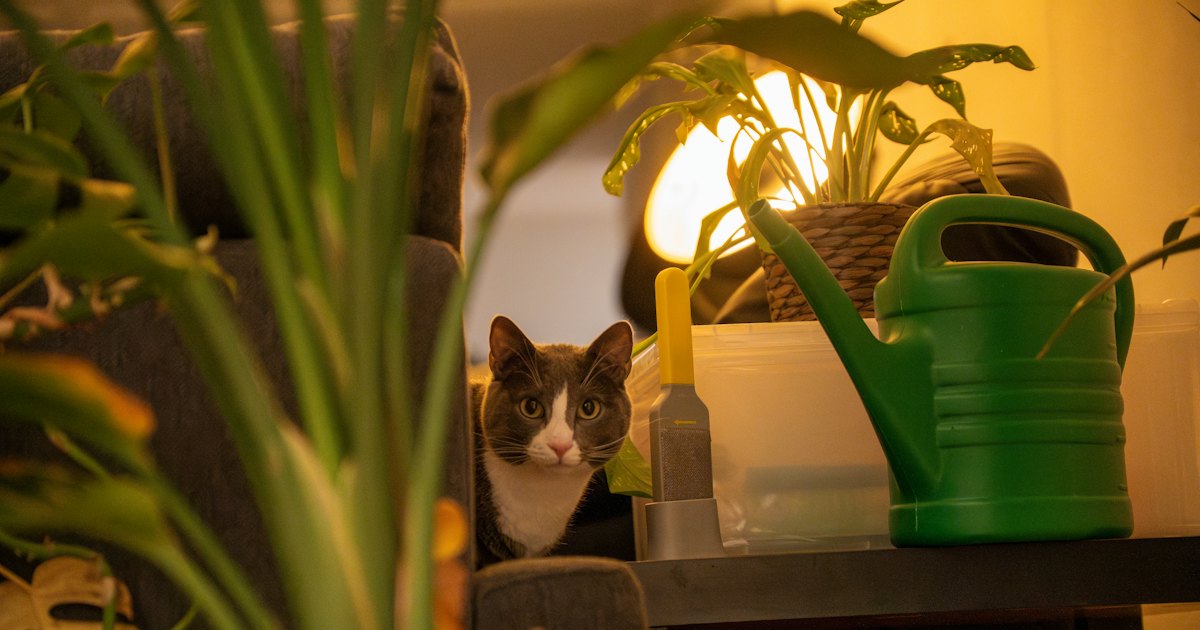
Cat-safe plants are houseplants that won't poison your cat if they're chewed, licked, or swallowed. Spider plants, Boston ferns, and areca palms are common safe picks. Toxic ones like lilies, sago palm, and pothos range from mild stomach upset to kidney failure, so check a plant's name before it comes home.
On this page
Curious kittens and newly adopted cats are the most likely to test an unfamiliar plant with their teeth. Prevention beats treatment here: check a plant's safety before you buy it, not after your cat already took a bite. The list below sorts common houseplants by room, so you can decorate without guessing which ones are risky.
Cat Translator
What if you answered
in her own language?
Cat Translator gives you a playful answer in seconds — on the iPhone you already have.

PetTalk — Pet Translator
4.51,246+ ratingsFree


The 30-Second Plant Check
Run through this short check before you decide whether a new plant is a problem.
- Look up the plant's full name, not just the nickname on the tag — many toxic and safe plants share a common name.
- Check which part of the plant your cat actually chewed. Leaves, stems, bulbs, and sap can carry different levels of toxin.
- Watch for drooling, vomiting, or pawing at the mouth in the first hour — these are usually the earliest signs of a reaction.
If any of those three raise a flag, skip ahead to the symptoms list under Method 3 and call your vet.
Method 1: Confirm the Exact Plant Name Before You Buy
Plant tags at the store aren't reliable. Several unrelated plants share the same common name, and that's exactly where cat owners get tripped up.
Peace lily is a good example. It looks like a lily and carries the name, but it's actually a Spathiphyllum, not a true lily. It causes drooling and mouth irritation if chewed — uncomfortable, but rarely life-threatening. A true lily, like an Easter or Tiger lily, is a different story: even a few bites of leaf or a lick of pollen can cause kidney failure in a cat.
When you're not sure about a plant, check its toxicity with your vet or an animal poison control resource before you buy it.
| Plant | Cat Safety | What to Know |
|---|---|---|
| Spider Plant | Safe | Non-toxic; may cause mild stomach upset only if eaten in large amounts |
| Boston Fern | Safe | Non-toxic to cats |
| Areca Palm | Safe | Non-toxic; one of the most common cat-safe palms |
| Calathea | Safe | Non-toxic |
| Parlor Palm | Safe | Non-toxic |
| Pothos | Toxic (mild-moderate) | Calcium oxalate crystals cause mouth irritation, drooling, and vomiting |
| Peace Lily | Toxic (mild) | Mouth irritation and drooling; not a true lily |
| True Lilies (Easter, Tiger, Asiatic) | Toxic (severe) | Can cause kidney failure, even from pollen on fur |
| Sago Palm | Toxic (severe) | All parts are toxic; can cause liver failure |
| Aloe Vera | Toxic (mild) | Vomiting, diarrhea, and lethargy from saponins |
| Snake Plant | Toxic (mild) | Mouth irritation and vomiting |
Method 2: Pick Cat-Safe Plants Room by Room
Once you know a plant's real name, the next step is placement. A safe plant in a low pot a cat can reach is still a problem if it gets knocked over and nibbled daily, so think about the room, not just the species.
Living Room and Office
- Spider plant — hangs well out of reach and tolerates low light.
- Areca palm — a tall, bushy floor plant that's non-toxic if chewed.
- Calathea — patterned leaves, non-toxic, prefers indirect light.
Bedroom and Bathroom
Bedrooms and bathrooms often run more humid than the rest of the house, which suits ferns better than most plants.
- Boston fern — thrives in bathroom humidity and is non-toxic.
- Parlor palm — compact enough for a windowsill, non-toxic.
Kitchen and Windowsills
Kitchens put plants at nose height on a counter, so skip the ornamental bulbs and toxic herbs that look edible.
- Cat grass or wheatgrass — grown specifically for cats to chew on.
- Basil and rosemary are generally considered safe in small amounts, unlike many ornamental bulbs kept nearby.
Cat Translator
Still reading about the signs?
Open Cat Translator and try a recording next time your cat talks. Free on iPhone, iOS 16 or newer.
PetTalk — Pet Translator
4.51,246+ ratingsFree
Method 3: Learn to Spot Plant-Poisoning Symptoms Fast
Symptoms depend on the plant and how much your cat ate, but a few signs show up across almost every case: drooling, vomiting, pawing at the mouth, and sudden lethargy.
A sudden hiss, growl, or yowl right after your cat noses a new plant is also worth paying attention to. That's a stress sound, not a symptom on its own, but it's a reason to look closer. Cat Translator — listed on the App Store as PetTalk - Pet Translator — turns that growl or yowl into a plain-English guess at your cat's mood, running the analysis on your iPhone without uploading the recording anywhere. It won't diagnose poisoning, but pairing an unusual vocal change with a chewed leaf is a reasonable reason to call your vet.
If you see any of these signs, don't wait to see if they pass. Call your vet or an animal poison control line right away, and bring a piece of the plant or a clear photo with you. For behavior changes beyond this one moment, our guide on cat behavior explained covers the wider range of signals cats give off when something's wrong.
Method 4: Make the Plants You Already Own Off-Limits
If you already own something toxic and don't want to get rid of it, distance and barriers do most of the work.
- Move hanging baskets and tall plant stands at least a few feet from any surface a cat can jump from — shelves, cat trees, and windowsills all count as launch pads.
- Switch the pot to a closet, laundry room, or another door-closed space the cat can't get into.
- Offer cat grass or a cat-safe lookalike nearby, so your cat has something to chew that isn't the toxic plant.
- A bitter-tasting houseplant spray on the leaves can discourage chewing, though some cats ignore it completely.
None of this makes a severely toxic plant like a lily or sago palm fully safe around a determined cat. If your cat keeps going after it, the honest fix is giving the plant away, not building a taller barrier.
Method 5: Watch for Risk Spikes Around Holidays and New Arrivals
Plant risk isn't flat all year. It spikes around specific events, and knowing them ahead of time beats reacting after the fact.
- Easter and spring — lily bouquets and potted Easter lilies are some of the most dangerous plants a cat can encounter; keep cut lilies out of the house entirely if you have a cat.
- Winter holidays — poinsettias usually cause mild mouth and stomach irritation, milder than many people expect, but mistletoe and holly berries are more dangerous and worth skipping.
- A new kitten or newly adopted cat — young cats explore everything with their mouths, so the first few weeks are the highest-risk window for any plant within reach.
If you're introducing a new cat or kitten into a home that already has houseplants, treat it the same way you'd treat introducing two cats to each other: slowly, with an easy way to retreat, and with the riskiest plants put away first. Our guide on introducing cats to each other walks through that first-week setup in more detail.
Cat Translator
Still reading about the signs?
Open Cat Translator and try a recording next time your cat talks. Free on iPhone, iOS 16 or newer.
PetTalk — Pet Translator
4.51,246+ ratingsFree
Frequently Asked Questions
What common houseplants are toxic to cats?
Lilies, sago palm, pothos, and aloe vera are among the most common toxic houseplants. True lilies and sago palm are the most dangerous — both can cause kidney or liver failure, sometimes from a small bite or a lick of pollen off the fur.
Are succulents safe for cats?
It depends on the species. Jade plant, string of pearls, and kalanchoe are toxic to cats and typically cause stomach upset, while haworthia and echeveria are generally considered safe. Check the exact species name before assuming any succulent is fine.
Is aloe vera safe for cats?
No, aloe vera is considered toxic to cats, not just mildly irritating. The gel and outer leaf contain saponins that usually cause vomiting, diarrhea, and lethargy if chewed, even though aloe is often sold as a safe, natural remedy for people.
Are artificial or fake plants safe for cats?
Most artificial plants aren't toxic themselves, but swallowed bits of plastic leaf or wire stem can cause choking or a gut blockage. Treat a fake plant your cat chews on the same way you'd treat any small inedible object, and move it out of reach.
What should I do if my cat eats a toxic plant?
Remove your cat from the plant right away, and note which plant it was and roughly how much got eaten. Call your vet or an animal poison control line immediately instead of waiting for symptoms, and bring a piece of the plant or a photo if you can.
How do I cat-proof my house against toxic plants?
Check every plant you already own against a toxic and non-toxic list, then move anything toxic somewhere your cat can't jump to — a closed room, a tall shelf away from furniture, or outdoors. Swap plants you can't relocate for cat grass or a safe lookalike instead.