What Are Good Russian Blue Cat Names?
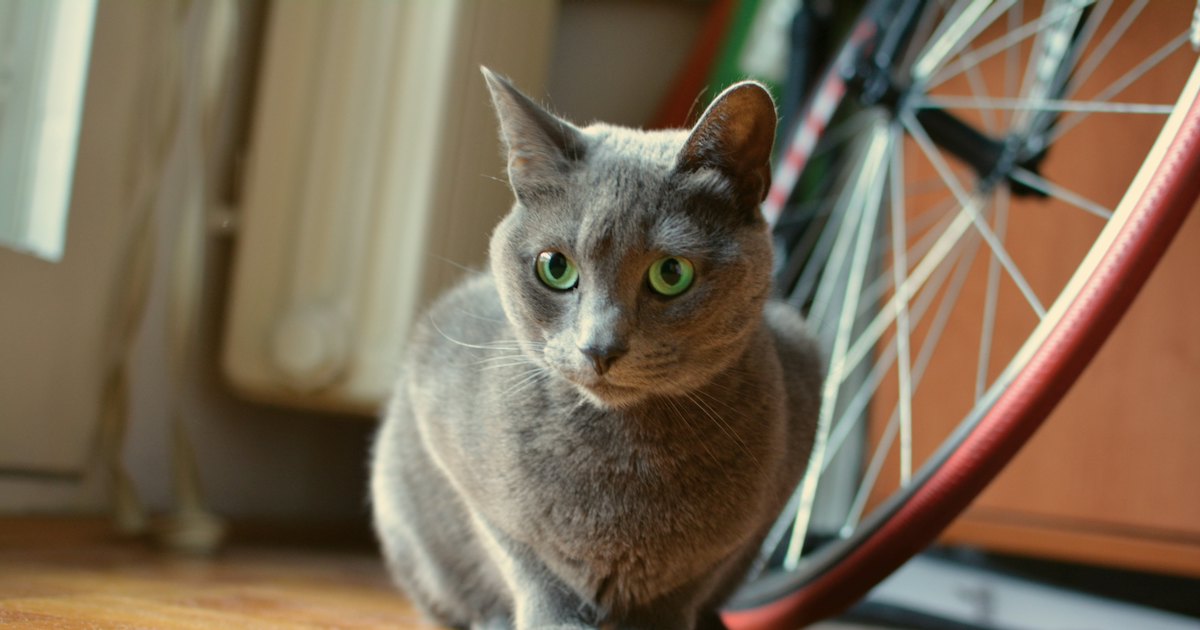
Good Russian Blue cat names lean into the breed's Slavic roots and its signature blue-grey coat. Think Nikolai, Anastasia, Smoke, or Slate. The best picks are short enough to call out, and distinct enough your cat isn't one of three Lunas at the vet. This guide sorts 100+ names by theme, with a meaning listed for each one.
On this page
In our experience helping readers name cats, Russian Blues reward two kinds of names. Short, clipped sounds work from across the room. Softer Slavic names work too, nodding to the breed's origins. A five-syllable pick like Yekaterina looks striking on a pedigree certificate. It gets tiring fast when you're calling a cat in for dinner at 6 a.m.
Cat Translator
What if you answered
in her own language?
Cat Translator gives you a playful answer in seconds — on the iPhone you already have.
PetTalk — Pet Translator
4.51,246+ ratingsFree


The Quick Pick: Match Your Russian Blue's Personality
Pressed for time? Match your cat below, then jump to that section for the full list.
| Vibe | Best For | Example Names |
|---|---|---|
| Slavic classics | A cat with old-world elegance or a Russian heritage tie | Nikolai, Anastasia, Sasha, Mishka |
| Blue-grey coat tones | The signature silvery-blue coat the breed is known for | Smoke, Slate, Misty, Ash |
| Royal and aristocratic | A dignified, reserved cat that holds itself like it's in charge | Romanov, Duchess, Tsar, Zarina |
| Quiet and ghost-like | A shy, soft-spoken cat that vanishes when guests arrive | Shadow, Whisper, Phantom, Mist |
| Short and punchy | Any Russian Blue — easy to call, easy to shout at 6 a.m. | Blu, Kit, Jet, Pip |
Classic Slavic And Russian Names
A name pulled straight from Russian naming traditions tells everyone your cat's whole backstory in one word. Some entries here are formal, and some are pet forms people actually shout across a kitchen. Pick whichever version fits how formal you want the vet paperwork to sound.
- Nikolai — means "victory of the people."
- Dmitri — means "devoted to the earth."
- Boris — an old Slavic name meaning "wolf" or "fighter."
- Ivan — the Russian form of John, "God is gracious."
- Sasha — a nickname for Alexander or Alexandra, meaning "defender."
- Anastasia — means "resurrection."
- Natasha — short for Natalia, "born on Christmas Day."
- Olga — an old Slavic name meaning "holy" or "blessed."
- Mishka — a pet form of Mikhail that also means "little bear."
- Vanya — the everyday nickname for Ivan.
- Katya — short for Yekaterina, meaning "pure."
- Irina — the Russian form of Irene, "peace."
- Vlad — short for Vladimir, "ruler of the world."
- Yuri — the Russian form of George, meaning "farmer."
- Pavel — the Russian form of Paul, meaning "small."
- Yelena — means "bright, shining one."
- Grigori — the Russian form of Gregory, "watchful."
Names Inspired By The Signature Blue-Grey Coat
The breed's whole reputation rests on that dense, silvery-blue double coat. Naming your cat after its color is the most literal option on this list. It's also the hardest one to get wrong.
- Smoke — for the soft, hazy grey of the coat.
- Slate — the flat, blue-grey of roofing stone.
- Misty — for a coat that looks like morning fog.
- Ash — the pale grey left after a fire burns out.
- Frost — the silvery sheen that catches the light.
- Steel — a cooler, harder-edged take on grey.
- Pewter — the dull metallic grey of old tableware.
- Storm — for a coat the color of storm clouds.
- Flint — the dark grey of struck stone.
- Chrome — a brighter, almost reflective grey.
- Graphite — the deep grey of a pencil's core.
- Denim — a soft blue-grey, like faded jeans.
- Dusk — the blue-grey light right before dark.
- Charcoal — a deeper, almost black-grey shade.
Elegant And Aristocratic Names
Russian Blues are sometimes called the Archangel Cat, after the Russian port city of Arkhangelsk, where breed lore places their first home. That northern, old-world association makes royal and noble names feel earned rather than silly.
- Romanov — the surname of Russia's last imperial family.
- Tsar — the historic title for a Russian emperor.
- Zarina — a feminine form of tsarina, or empress.
- Duchess — a title just below royalty.
- Countess — a noblewoman's title, elegant without trying too hard.
- Baron — a formal, old-world title for male cats.
- Empress — for a cat that clearly runs the household.
- Majesty — simple, direct, and a little tongue-in-cheek.
- Peter — after Peter the Great, who modernized Russia.
- Catherine — after Catherine the Great, one of Russia's longest-reigning rulers.
- Alexei — the name of the last Tsarevich, Russia's final crown prince.
- Anya — a softer nickname once used by Russia's imperial princesses.
- Faberge — after the jeweled eggs made for the Russian court.
- Royal — short, simple, and still gets the point across.
Cat Translator
Still reading about the signs?
Open Cat Translator and try a recording next time your cat talks. Free on iPhone, iOS 16 or newer.
PetTalk — Pet Translator
4.51,246+ ratingsFree
Quiet, Mysterious Names For A Ghost-Like Cat
People who live with Russian Blues tend to describe the breed the same way: reserved around strangers, devoted to one or two people, and a little hard to read. Names that lean into that hush fit the personality better than anything loud.
- Shadow — for a cat that trails you without a sound.
- Whisper — for a cat that rarely meows loudly.
- Phantom — for a cat that seems to vanish mid-room.
- Mist — soft, pale, and a little hard to pin down.
- Ghost — a nod to the breed's pale, silvery look.
- Echo — for a cat that answers back, quietly.
- Shade — a cooler cousin of Shadow.
- Vesper — Latin for "evening," a quiet, dusky name.
- Haze — for a coat that looks slightly blurred at the edges.
- Wisp — small, light, and easy to miss.
- Hush — about as literal as a quiet-cat name gets.
- Specter — for the cat that startles guests by appearing silently.
Short, Easy-To-Call Names
Not every owner wants a name with history attached. A short, one-syllable option is just easier to live with. It's easier to yell from the porch, and easier to fit on a tag.
- Blu — simple and directly on theme.
- Gray — the plainest, most literal option.
- Kit — short for kitten, works at any age.
- Bo — two letters, easy to shout.
- Milo — popular, friendly-sounding, and short.
- Zee — ends the alphabet and ends every sentence fast.
- Jet — short, sharp, and a shade of dark grey.
- Fox — punchy and a little sly-sounding.
- Lex — short for Alexei, Alexander, or just itself.
- Remy — soft-sounding and easy to call.
- Finn — short, friendly, and works for any gender.
- Nico — a quick nickname with a European feel.
- Dex — sharp-sounding and easy to shout.
- Pip — tiny, simple, and hard to mispronounce.
Unisex And Gender-Neutral Picks
A name that works regardless of sex solves a real problem. Adopted cats sometimes arrive with a name that no longer fits, and breeders need neutral options before a kitten's sex is confirmed. These picks work for any Russian Blue, male or female.
- Blue — the most literal unisex pick on this list.
- Sky — soft, open, and works for either sex.
- River — calm-sounding and gender-neutral.
- Charm — a little old-fashioned, in a good way.
- Sage — herbal, muted, and easy on the ears.
- Robin — a classic unisex name with a cheerful sound.
- Wren — short, soft, and increasingly popular for pets.
- Indigo — a deeper, more dramatic take on blue.
- Sterling — nods to both the coat color and quality.
- Harbor — fits the breed's seafaring, Archangel origin story.
- Lane — plain, short, and easy to call out.
- Reed — simple and slightly nature-themed.
- Quinn — popular across people and pets alike.
- Marlowe — literary-sounding without picking a specific author.
Russian Literature And Culture Inspired Names
Russia has no shortage of cats in its own folklore and literature, which makes for a deep well of names with a story behind them. A few nod to real historical figures. Others nod to ballets and novels most literature students eventually read.
- Behemoth — the mischievous black cat from Bulgakov's The Master and Margarita.
- Pushkin — after poet Alexander Pushkin.
- Tolstoy — after novelist Leo Tolstoy.
- Chekhov — after playwright Anton Chekhov.
- Nabokov — after novelist Vladimir Nabokov.
- Rasputin — a dramatic pick with real historical weight.
- Baba — short for Baba Yaga, the folklore witch.
- Yaga — the fuller version of the same folklore name.
- Volkov — literally means "wolf" in Russian.
- Firebird — after Stravinsky's famous ballet.
- Nutcracker — after Tchaikovsky's best-known ballet score.
- Swan — after Tchaikovsky's Swan Lake.
- Volga — named for Russia's longest river.
- Siberia — vast, cold, and a little dramatic.
- Kremlin — bold, blunt, and unmistakably Russian.
Still deciding? Behavior usually settles the final pick once a kitten's personality shows itself. If the moonlit, silvery feel of these coat-toned names appeals to you, our celestial cat names guide has more in that direction. Prefer to browse alphabetically instead? Our cat names that start with B list is a good next stop.
Cat Translator
Still reading about the signs?
Open Cat Translator and try a recording next time your cat talks. Free on iPhone, iOS 16 or newer.
PetTalk — Pet Translator
4.51,246+ ratingsFree
Frequently Asked Questions
What is a good name for a Russian Blue cat?
A good name usually nods to one of three things: the breed's Slavic roots, its signature blue-grey coat, or its quiet, reserved personality. Nikolai, Smoke, and Shadow each hit a different one of those angles. The right pick is less about tradition and more about what you'll actually enjoy calling out every morning.
Why is it called a Russian Blue?
The breed gets its name from its country of origin and its coat color. Breed lore places its first home in the Russian port city of Arkhangelsk, which is why some registries call it the Archangel Cat. The "blue" refers to the dense, silvery-grey double coat every Russian Blue is born with.
Should a Russian Blue's name match its personality?
It helps, but it isn't required. Russian Blues tend to be quiet and slow to warm up to strangers. A hushed name like Shadow or Whisper often fits that better than something boisterous. That said, plenty of reserved cats end up with loud, silly names anyway, and the cat never seems to mind.
Do Russian Blue cats come in any color besides grey?
No — the breed standard calls for a single solid blue-grey coat, and that's the only color recognized for Russian Blues. Kittens are sometimes born with faint tabby-like ghost markings that fade within the first few months. Any cat with a different base color is a different breed or a mixed-breed cat, not a Russian Blue.
Is it okay to give a Russian Blue a long, formal name?
Yes, as long as there's a short version for daily use. A longer name like Anastasia or Yekaterina works fine on paperwork and pedigree certificates. Most owners end up shortening it anyway — Anastasia becomes Ana, Yekaterina becomes Katya. Pick a long name only if you like the nickname it naturally produces.