How to Cat-Proof Your House: A Room-by-Room Checklist
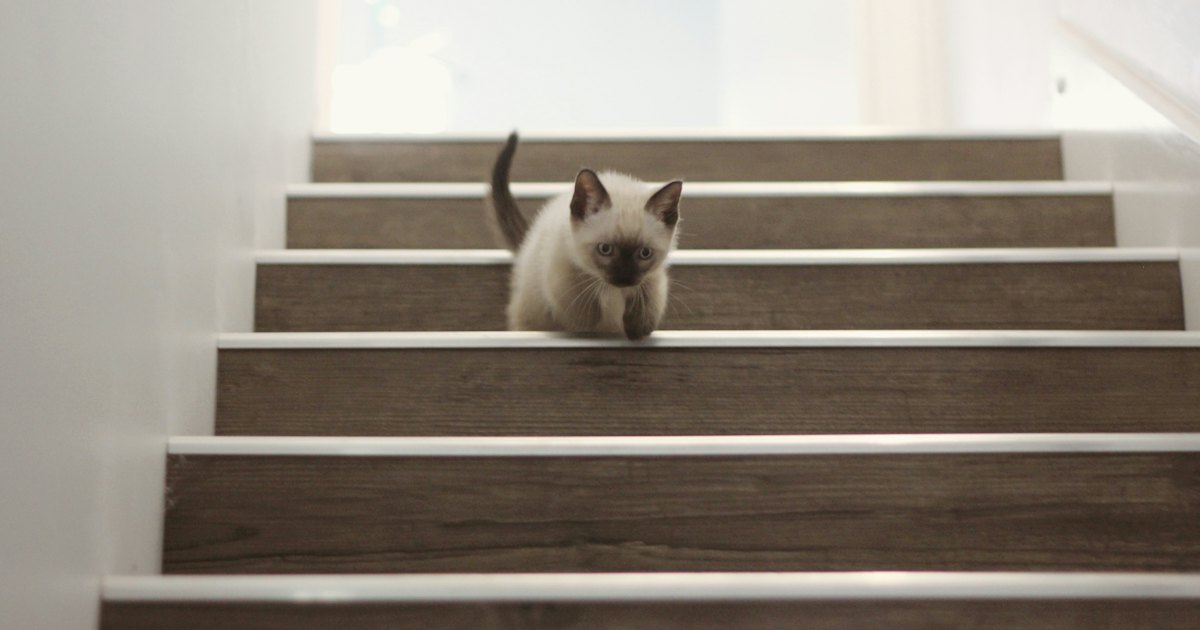
Cat-proofing your house means removing the hazards cats run into most. Think unlocked windows, toxic plants, dangling cords, and food or medicine left within paw's reach. Walk each room at cat height and secure anything that can fall, swing, or unlatch. Then lock chemicals and human food behind closed doors.
On this page
In practice, cat-proofing rarely comes down to one big danger. It usually comes down to five or six ordinary objects. A loose window screen, a stray charging cable, and a plate within jumping distance cause more trouble than anything else. Slow down and check those spots first. Most of the real risk disappears before it ever becomes an emergency.
Cat Translator
What if you answered
in her own language?
Cat Translator gives you a playful answer in seconds — on the iPhone you already have.

PetTalk — Pet Translator
4.51,246+ ratingsFree


The 60-Second Cat-Proofing Sweep
Before you tackle anything else, do a fast walk-through. Stand in the doorway of each room and scan at cat height, not yours.
- Any window or screen a cat could push open?
- Any cord, blind pull, or charging cable hanging loose?
- Any food, medicine, or chemical sitting on a low counter or table?
- Any small object — a hair tie, a button, a bottle cap — within paw's reach?
If you spot even one yes, start with the matching fix below before you do anything else.
Fix 1: Secure Windows, Screens, and Balconies
Cats push on screens the same way they push on anything else blocking a path they want. A screen that looks sturdy can pop out of its frame under that kind of weight, and an open window with no secondary barrier is enough for a fall.
Check every screen from outside the frame, not just from inside the room. If it flexes or the frame feels loose, add a secondary mesh guard rated for pets. Or only crack that window with a stop that keeps the gap too narrow for a cat to push through.
Balconies need the same logic. A rail a person can lean on safely is not the same as a rail a cat can't slip under or jump over. Enclose the balcony with cat-proof netting, or keep the door closed and treat it as off-limits.
Fix 2: Lock Away Toxic Plants, Cleaners, and Medication
Several common houseplants are dangerous enough that a single bite can send a cat to the emergency vet. Lilies are the clearest example — every part of the plant is toxic to cats, including the pollen.
The ASPCA keeps a searchable list of plants that are toxic and non-toxic to cats, so check anything already growing in your home against it before assuming it's safe.
Cleaners, medication, and essential-oil diffusers belong on a shelf a cat can't reach, not just a cabinet a cat can't open. Cats can nudge open lightweight cabinet doors and knock items off low shelves. Latch what you can, and move the rest up.
Fix 3: Tame Cords, Blinds, and Small Objects
String, ribbon, rubber bands, and the elastic in hair ties are easy for a cat to swallow and hard for a vet to remove once they do. These linear objects can snag in the intestine and cause a blockage that needs surgery.
Walk through each room and gather anything stringy into a closed drawer. Sewing kits, coiled phone chargers, blind pull cords, and holiday tinsel are the usual suspects. A cord organizer or cable clips along the baseboard keep charging cables out of paw's reach.
Cat Translator
Still reading about the signs?
Open Cat Translator and try a recording next time your cat talks. Free on iPhone, iOS 16 or newer.
PetTalk — Pet Translator
4.51,246+ ratingsFree
Fix 4: Rethink Counters, the Trash, and Open Flames
Kitchens hide more hazards than any other room: an open trash can, food left on the counter, and a stovetop that's still warm. Chocolate is one of the most common kitchen hazards, because it contains theobromine and caffeine, and cats process both far more slowly than people do.
Chocolate is on the ASPCA's list of people foods to avoid feeding your pets, and that covers chocolate ice cream and baked goods too, not just a bare bar of chocolate.
A trash can with a locking lid solves most counter-adjacent problems at once. Swap candles and anything with an open flame for a flameless version if your cat likes to jump onto shelves or mantels.
Fix 5: Set Up a Safe Room for Moving Day or a New Arrival
Moving day, a new kitten, or a long guest stay all add stress on top of a space that suddenly looks and smells different. Set up one quiet room with food, water, a litter box, and a hiding spot before the chaos starts. Let your cat explore the rest of the house gradually once things settle.
A cat that's unsettled often gets louder before anything else. If your cat starts yowling or chirping more than usual during a transition, PetTalk — Pet Translator listens to the sound and gives you a plain-English guess in seconds, processed on your phone instead of uploaded anywhere.
If an upcoming vet visit is part of why you're cat-proofing — a move, a new pet, or overdue shots — getting the carrier under control helps just as much. Our guide on how to get a cat in a carrier without a fight covers that side of the transition.
Kitten-Proofing vs. Cat-Proofing: What Changes
A kitten finds hazards an adult cat already learned to ignore. Kitten-proofing covers everything in this checklist, plus a few extra spots that only matter while a cat is small enough to fit into them.
- Appliance gaps: a kitten can wedge into a space behind or under a fridge or washer that an adult cat wouldn't fit.
- Recliners and sofa beds: the folding mechanism can trap a kitten that climbs inside the frame.
- Open toilet lids: a small kitten can struggle to climb back out.
- Tiny objects: buttons, coins, and rubber bands are more tempting to a kitten still exploring with its mouth.
Go through the same five fixes above, then add a kitten-specific pass through any gaps you'd normally ignore. Most of these stop being a daily risk once a kitten grows into an adult cat's size and habits.
Room-by-Room Hazard Summary
| Room | Common hazard | Practical fix |
|---|---|---|
| Kitchen | Chocolate, onions, and other toxic food left on counters | Store food in closed cabinets and keep the trash lidded |
| Bathroom | Open toilet lids and unattended cleaning chemicals | Close lids and keep cleaners on a high, latched shelf |
| Living room | Loose blind cords and candles within jumping reach | Clip cords out of reach and switch to flameless candles |
| Bedroom | Hair ties, buttons, and medication left on nightstands | Keep nightstands clear and store medication in a drawer |
| Windows & balconies | Screens that pop loose and unsecured balcony rails | Add a secondary pet-rated screen or enclosed netting |
Cat Translator
Still reading about the signs?
Open Cat Translator and try a recording next time your cat talks. Free on iPhone, iOS 16 or newer.
PetTalk — Pet Translator
4.51,246+ ratingsFree
Frequently Asked Questions
Can cats eat chocolate?
No. Chocolate contains theobromine and caffeine, and a cat's body clears both far more slowly than a person's does. That makes even a small amount risky, and it includes chocolate ice cream, cocoa powder, and baked goods, not just a plain chocolate bar.
Will chocolate kill a cat?
It can, depending on the type of chocolate, the amount eaten, and the size of the cat. Dark chocolate and baking chocolate carry more theobromine than milk chocolate, so they're more dangerous in a smaller amount. Call your vet or an animal poison control line right away if your cat eats any chocolate.
How is kitten-proofing different from cat-proofing?
Kitten-proofing adds a layer on top of standard cat-proofing. Kittens fit into smaller gaps, chew more exploratory objects, and haven't yet learned which smells and textures mean danger. The checklist grows to cover appliance gaps, recliner frames, and smaller swallowable items.
Do indoor-only cats still need the house cat-proofed?
Yes. An indoor-only cat still has access to every toxic plant, open window, and kitchen counter in the house. Staying inside removes outdoor risks like traffic, but it doesn't remove any of the hazards in this checklist.
What's the single biggest hazard people miss?
Unsecured window screens are the one that gets skipped most often, because they look fine from a glance inside the room. Push on each screen from outside the frame before you trust it, especially in any room above the ground floor.
How often should I redo a cat-proofing check?
Redo the sweep whenever something in the house changes — new furniture, a new plant, a holiday display, or a new pet. Most households only need one full room-by-room pass, then a quick recheck after changes like these.